Showing posts with label photo. Show all posts

2.27.2014

Alive, I promise

So...

Yeah. It's been quiet around here.

It's not that I don't have a lot to say.

Really, for starters, let me be embarrassed that I didn't even stop in here to post something big and important (that you probably figured out, if you can do math, and that you probably figured out if you are on Facebook or have spent any time near me or my extended family in the last three months):

Welcome to the world, Samuel Tyler! 
(Err...welcome to having spent three months in this world already before your mom got around to posting anything about you here...)

Here is a quick photo timeline - brand new through three months:


Yeah. We think he's pretty adorable. I don't need to litter this blog with incessant baby talk; if you're curious about Sam, his birth story, and random tidbits month to month, feel free to get your baby fix over at Laughing with Sarah.

I'm a month into being back at work, and Sam hangs out here in the office with me every day. It makes for a very full existence. For good and for bad. :) For instance, I have a crying, angry baby on my lap right now, and he's full, and I just changed his diaper, so I really have no idea what is wrong. Which makes me frustrated. And crying baby does not equal amazing productivity. I spend most days alternating between entertaining him (and getting very little done), and then rejoicing when he falls asleep for a nap (and rushing to get as much done as possible in a one or two hour window).

Matt is teaching a course at Luther College this semester, in addition to his regular human resources consulting job out of Chicago, so he is just about as busy as I've ever seen him. Maybe as busy as he was in law school, even? But I hope that he's finding the opportunity fulfilling, and not just stressful. And maybe it will open new doors for the future!

Let's see. What else...

It's cold here. By "here," I don't think I mean Iowa. I think I mean the midwest. But either way, brr. Lots of days below zero. And lots of snow. Exactly what winter should be, in my estimation. But the icy roads and the inability to spend any time outside (lest my face fall off) are starting to get a little old. And so I've been drinking a lot of coffee and hot chocolate to keep warm. And cheating a little and wearing jeans to the office some weekdays, because it is just too cold for skirts or for flimsy dress pants.

I have all sorts of things I want to write about soon: thoughts on family, thoughts on community, thoughts about the spirituality of repetition and routine...so look for more writing on the horizon. Hopefully I can also find the time and energy and organization to start posting my sermons again, because it's nice to have them out and about beyond just the walls of the sanctuary.

Anyway, consider this post a re-entry. Life is busy, and finding uninterrupted time to write is tricky (Sam loves to be held, and I'm terrible at typing one-handed!), but writing is good for me. It is normalizing. It centers me. It keeps me connected.

So watch for more to come. I've missed it here.

11.08.2013

Daylight Savings Time

I'm keeping warm with a scarf, a baby belly, and slippers.
My knitting sits on the coffee table, waiting patiently.
Emme claims the blanket on the end of the couch as her own.
This is what happens when the afternoon turns gray.
It is 3:34 p.m. here in Iowa.

I just turned on lights in the living room because it was getting dark. Hard to tell whether the darkness is due to last weekend's time change or whether it is due to a thick, gray mass of clouds that have settled in over the town.

It always takes me a few days to adjust to the time change in the fall. Mornings, instead of looking like dark nighttime, look instead like faintly-lit gray hazes that make you wonder whether it is morning or evening; early daytime or late-afternoon cloud cover. Afternoons turn dark sooner than expected, and night falls earlier, fooling you into thinking that the day has come and gone more quickly than you expected. It takes me a few days of this to settle into it, to get to a place where I don't feel so disoriented and unsure of the time and rhythm of the day.

And then, as I settle in, something switches in me, and I get it. I remember what winter is like, and I understand the new feel of the day, and I remember the parts of my own self that get tucked away when we spring our clocks forward in March.

In other lifetimes, I gave myself an October threshold for listening to Advent and Christmas music. These days, I hold out until at least the start of November. This year, for whatever reason, I didn't even start thinking about it until last week, when I started loading up playlists onto my iPod in preparation for labor and delivery later this month, and I programmed myself a copious amount of Christmas music for those forthcoming hours.

I forget that we've passed Halloween already, and that Thanksgiving is only a few weeks away. My usual rush to embrace autumn feelings and flavors has been a little slow this year.

Perhaps because while the seasons change around me, and the time changes, and the sun sets earlier in the afternoon, my mind is not on the seasons themselves, or on holidays or traditions or even the bits and pieces of nostalgia that late fall and early winter dig up in me.

For the whole span of time we've lived in Iowa, time has been pressing ahead toward only one thing: the birth of this much-loved, much-awaited hedgehog of a baby, whose due date is just two weeks away. Thanksgiving this year will either be a celebration of a very new newborn, or the last few days of a very very uncomfortable pregnant lady. Christmas feels like forever away, because something as big as HAVING A BABY needs to happen between now and then. The whole fall has been a time of talking about this eventual baby and making initial plans and preparations, except that we are now in the last days, and the things that needed to get done "sometime this fall" now need to get done today and this week and as soon as we can manage them.

Today, though, Daylight Savings Time finally caught up to me in a useful way. As I sat here on the couch, watching the grayness of the afternoon creep in through the windows, I felt this urge for something to happen. Tired of waiting, I felt ready for a holiday, or ready for some nostalgia. Ready to knit and make soup and do autumnal things. Ready to scoff a little less at the Thanksgiving and even Christmas commercials on TV. I am ready for something to happen. Ready to meet this baby, or to eat some stuffing, or to start sorting through the Christmas decorations that we might put up right after Thanksgiving with family members who will be coming to see us. I'm okay with the wind blowing outside, and with the fact that it might be time to pull out my winter coat, even if I can't zip it up right now. I am ready for something to happen. Babies, holidays, families, cozy nights, anything to reclaim a space for myself that is no longer a space of mere waiting, but a space of anticipation and joy and movement.

Maybe being nine months pregnant makes me a bit of a crazy-lady. Because I'm not sure how a gray afternoon can somehow make me excited rather than depressed. But maybe the weather just reminds me that the seasons are again changing, and that nothing actually stands still in life, and when the quiet of waiting starts to drive you a little nuts, even the world outside can remind you that change is always on the horizon, and those things that you've been waiting for will indeed come, and all the days that you've been counting will indeed lead to something new and interesting and beautiful.

10.07.2013

20 Pentecost: Faith enough

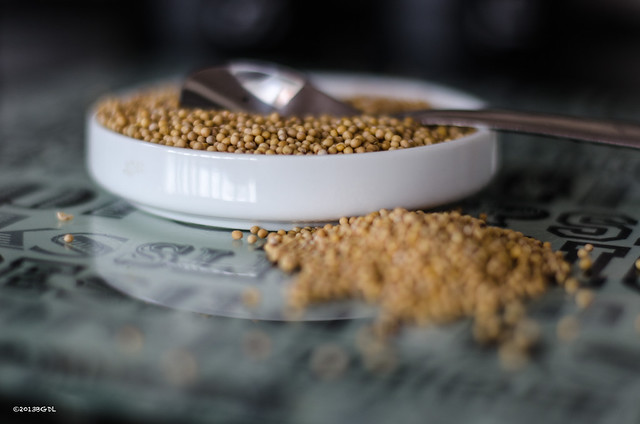
Mustard Seeds
"Mustard Seeds" by BGDL, on Flickr
Luke 17:1-10
Jesus said to his disciples, "Occasions for stumbling are bound to come, but woe to anyone by whom they come! It would be better for you if a millstone were hung around your neck and you were thrown into the sea than for you to cause one of these little ones to stumble. Be on your guard! If another disciple sins, you must rebuke the offender, and if there is repentance, you must forgive. And if the same person sins against you seven times a day, and turns back to you seven times and says, 'I repent,' you must forgive."

The apostles said to the Lord, "Increase our faith!" The Lord replied, "If you had faith the size of a mustard seed, you could say to this mulberry tree, 'Be uprooted and planted in the sea,' and it would obey you.

Who among you would say to your slave who has just come in from plowing or tending sheep in the field, 'Come here at once and take your place at the table'? Would you not rather say to him, 'Prepare supper for me, put on your apron and serve me while I eat and drink; later you may eat and drink'? Do you thank the slave for doing what was commanded? So you also, when you have done all that you were ordered to do, say, 'We are worthless slaves; we have done only what we ought to have done!'"


---
Every time I read this gospel, a hymn-verse leaps into my head. The disciples say "increase our faith," and my mind goes to the communion hymn, "Thee We Adore." Maybe you know it. The third verse goes like this:

Fountain of goodness, Jesus, Lord and God,
cleanse us, O Christ, with thy most cleansing blood:
increase our faith and love, that we may know
the hope and peace which from thy presence flow.
(Thee We Adore, O Hidden Savior, ELW 476)

Increase our faith and love, that we may know the hope and peace which from thy presence flow.

It's a prayer that many of us have likely prayed, in so many words, just like the disciples who cried out to Jesus, "increase our faith!"

It was October of last year. I was lying in bed at night, processing the news that our third attempt at IVF had failed. And for the first time in our many years of trying to have a baby, I finally got fed up. I laid awake in bed, praying...if you could call it praying. Mostly, I just said angry things to God. I said words inside my head that I’d never say out loud, in polite company or otherwise. I was hurt, I was angry, I was tired. And I wondered whether I had faith enough to keep going, to keep trying and hoping.

"Increase my faith and love," I prayed, in far angrier language, "that I might know hope and peace in this struggle."

Have you ever had nights like those? When you lie awake wondering if you really have faith and strength enough to press forward? When your doubts and fears seem to outweigh your faith? When the calling set before you by God seems to be just too difficult to carry out?

Throughout this season of Pentecost, the green season of growing in faith and discipleship, Jesus has been telling his disciples, over and over again, about the struggles of faith and discipleship: To be a disciple, you give up the comforts of home, and you put the concerns of the kingdom of God ahead of your other priorities. Being a disciple means carrying the cross, giving up possessions, and recognizing that the cost of discipleship is your very life itself.

Today, Jesus again instructs the disciples to do some hard things. “Follow me,” Jesus said, “and don’t give in to temptations to stray from working for the kingdom. Follow me in protecting the vulnerable. Follow me in confronting sin and injustice. Follow me in forgiving one another, and forgiving one another over and over again.”

Like the disciples, we are no stranger to the reality that faith and discipleship sometimes ask us to do very difficult things. Public things, like feeding the hungry, forgiving as we’ve been forgiving, putting the needs of others ahead of our own needs. And personal things, like moving forward through grief or confusion or tough personal circumstances.

Any one of these things has the power to keep us up at night, whether we are heartsick over the needs of our world or paralyzed by the needs of our own souls. And in those awake-at-night moments when we feel overwhelmed by the paths life has set before us, we, with the disciples, cry out, “Increase our faith!”

Because maybe, we believe, maybe if we had more faith, all the hard stuff would be easier. Maybe, if we had more faith, we could be better people. Maybe, if we had more faith, we could actually do good in the world. Maybe, if we had more faith, we’d have more answers and more certainty. Maybe, we think to ourselves, there is this certain level of faith, a certain volume of faith that needs to fill us up before we have the courage and strength to go forward in whatever God calls us to do or endure.

Everything else in life seems to function this way. You need a full gas tank before you can head out on a road trip, and you need a certain level money in your savings account before you can buy a house, and you need a certain number of years in your current position before you can earn a promotion, and you need a certain level of education or training before you can do certain tasks. We're used to this idea that you need a particular amount of something before you can benefit from it.

And so we look at faith the same way. Either as a practical concern or a matter of desperation. "Increase our faith!" we cry out to God, because it's hard for us to ever believe that we have enough of it.

The problem with this line of thinking is that it turns faith into a commodity rather than a gift. It turns faith into a bargaining tool, where we think we can trade a certain amount of faith for some outcome that we desire from God. It turns faith into a weird mystical protein shake that we drink to bulk ourselves up before we do the heavy lifting of sharing the gospel with the world.

This "increase in faith" mentality makes faith all about us instead of all about God; all about our needs instead of all about God's faithfulness.

This is where Jesus steps in with the reminder that even a speck of faith the size of a tiny mustard seed is plenty. More than enough.

Because the thing about faith is that it really isn't about us. It's about God. In our dark nights of the soul, it’s not actually the quantity of our faith that gets us through, it is the whole and complete faithfulness of God to us that sustains us. And when we are called to do hard things like forgiving and reconciling and feeding and healing, it’s not the strength of our faith that helps us carry out those tasks, it is the whole and complete faithfulness of God to us that empowers us.

Jesus tells the disciples that the tiniest speck of faith is enough to answer God's calling. That even the teensiest scrap of faith is plenty to act faithfully in the world. Hence his little discourse on slaves doing only what they ought. He’s telling the disciples that they don’t need superhuman faith to answer God’s call to act faithfully in the world.

Because there is no rule that says you have to have all of your own baggage figured out before you can offer a listening ear to a friend in need. And there's no prerequisite that you have to have forgiven yourself before you can forgive others around you. And you can feed the hungry even if you are still feeling spiritually hungry. And you can tell somebody that God loves them even if you aren't quite sure that you yourself are so loveable.

Jesus calls the disciples and us to follow in his way of mercy and love, but he doesn't tell us that we need to be spiritual giants before we can do that.

Instead, he assures us that a speck of faith the size of a mustard seed is plenty of faith to live as disciples. He reminds us, deep in our hearts, that a taste of bread and a sip of wine and a droplet of water are more than enough to carry us through each week.

Because even a tiny, feeble faith can cling to the promise that God is faithful, and loves his whole creation; that there is nothing, not height or depth or anything in all creation that can separate us from the love of God in Christ Jesus; that by God's grace alone we live and move and have our being.

Friends, God is bigger than all of your fears, all of your doubts, all of your hesitations. God is faithful, even when we aren't. Even your smallest seed of faith in our faithful God means that you have the strength to face tomorrow, and the power to live faithfully for the sake of the world. For it is indeed by grace that you have been saved and will be sustained, through faith, whether big or small, and this is not your own doing, it is the doing of God, who promises always to see you through each new morning, for each day is a new reminder of resurrection, and a new sign of hope for you, for me, and for all creation.

9.11.2013

16 Pentecost: Counting the cost

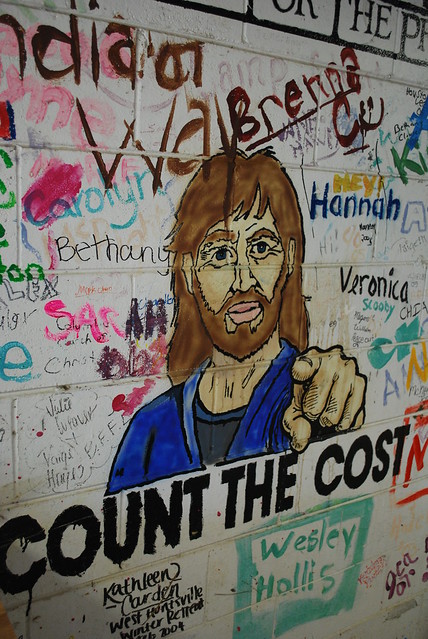
"Count the Cost"
"Count the Cost"
by Laura Megan Photography, on Flickr
Luke 14:25-33
Now large crowds were traveling with [Jesus]; and he turned and said to them, "Whoever comes to me and does not hate father and mother, wife and children, brothers and sisters, yes, and even life itself, cannot be my disciple. Whoever does not carry the cross and follow me cannot be my disciple. For which of you, intending to build a tower, does not first sit down and estimate the cost, to see whether he has enough to complete it? Otherwise, when he has laid a foundation and is not able to finish, all who see it will begin to ridicule him, saying, 'This fellow began to build and was not able to finish.' Or what king, going out to wage war against another king, will not sit down first and consider whether he is able with ten thousand to oppose the one who comes against him with twenty thousand? If he cannot, then, while the other is still far away, he sends a delegation and asks for the terms of peace. So therefore, none of you can become my disciple if you do not give up all your possessions.
---
It wasn’t too long ago that I found myself in the midst of a conversation about sales tax, of all things. (Riveting, I know. I hang around with terribly interesting people.) The conversation went something like this:

“Wouldn’t it be nice if sales tax was already factored into the cost of the things we buy? Doesn’t matter if it made prices look all funny, like $22.56. It would just be so much easier to know up front what things were really going to cost when you got to the register.”

And then we went on to think fondly of the handful of states in our country that don’t charge sales tax on necessities like food and clothing, not because those goods are necessarily cheaper to buy, but because there is no mystery. The cost is laid out, and there’s nothing more to it.

Counting the cost is something that we do all the time. Often, counting the cost means taking a look at what we think we can afford, and then choosing accordingly. Like how sometimes my beverage choice at Java John’s is determined not by what I want to drink, but by how much cash I have in my wallet. We count the cost when we think about spending money, or time, or energy, or commitment, and the question at stake is always, “Is it worth it?”

Which leads us to today’s gospel. Jesus, like a sales-tax-included pricetag, lays out the full cost of discipleship to the crowds who seek to follow him. He tells them exactly what it might cost them if they choose to walk in his footsteps.

We have to be careful when we approach today’s gospel. On first glance, it is easy to read it as a list of conditions that Jesus requires us to meet before we can become disciples. As if Jesus is saying, “first go renounce your family, then go give up all of your stuff, and then renounce life itself, and when you’ve done all of those things, come back to me and we can talk about your place among my disciples.” It is easy to misread this passage and come to believe that the cost of discipleship is an up-front cost that we somehow need to pay before we can join Jesus’ team.

But that way of thinking is pretty much opposite of the way that God works. God didn’t make us promise to cherish one another and the whole creation before he decided to craft the universe, and when we failed miserably at both of those things, God didn’t make us promise to be good or even to be sorry before he decided to show up in our world in the flesh and walk with us in the person of Jesus. Jesus didn’t make us promise to love him or believe in him before he choose to die for us. And God certainly didn't wait until the world was ready and receptive to raise Jesus from the dead and usher in the promise of new creation.

In the story of our faith, God is always the one who acts first, and God is always the one who loves freely, without making us first check the little box that says we accept his terms and conditions.

And so there's something else going on in today's gospel reading, something different than a message of "sacrifice everything for Jesus or else."

Because what we really have in the gospels is this guy Jesus who shows up on the scene, and starts telling people, “follow me.” He is this rebel prophet and teacher, who gets the religious leaders all riled up with some regularity, and he heals people and does these crazy miracles, and he teaches some pretty incredible stuff about forgiveness and mercy, and he keeps talking about this “kingdom of God,” and as he goes along, he keeps saying “follow me” to people, regardless of their place in life. And he’s interesting enough that people actually drop everything to follow him around.

Which sounds great until you realize that people have left behind families and obligations and livelihoods and possessions to follow Jesus. And that's a really big deal. Leaving behind your family, in Jesus’ time, especially if you were a man, meant leaving them without security, without status, and without protection. Leaving behind your job left you without income. Leaving behind your obligations to your town or clan or synagogue left you with a bunch of angry and confused people on your hands.

Now notice that Jesus doesn’t discourage people from doing all of this. He doesn’t send them home, saying “your family needs you” or “you should probably at least give your boss two-weeks’ notice before you quit your job.” He instead simply makes the point that you’d better be prepared, because following him is likely to come with a cost, because ushering in God’s kingdom of justice and peace and forgiveness and mercy is a big deal, and doing the work of this kingdom is pretty amazing, but it’s going to rock the boat.

And so when Jesus talks about calculating the cost of discipleship, I believe that he's actually just preparing us for the reality that sometimes God calls each of us to such an irresistible calling that everything - everything - we thought was important becomes less important. That sometimes when God moves our hearts to live as disciples, we become oddly willing to leave everything else behind. And that looks really really weird to the world. Because we aren't terribly used to this idea of sacrifice.

Matt and Kristi fell in love over organic chemistry homework. They graduated college together, went to medical school, started a family, and all the while knew, deep in their hearts, that God had a calling for them. So just two days ago, after months of preparation, Matt and Kristi and their two young girls left their Rochester home, boarded a plane, and two long flights later landed in Ethiopia, to begin their first two-year term as medical missionaries in a remote village about four hours from the closest city. Four hours from their mail, four hours from their mission headquarters, four hours from internet. In order to follow God's call, they had to bid farewell to sisters and cousins and parents. They had to sell many of their belongings, and pack and store whatever was left. For them, their call to discipleship happened just like Jesus predicted: giving up family and possessions and livelihood for the sake of the gospel. But note the order of operations. First came the call, then came the sacrifice, and not the other way around. Counting the cost happened only after saying yes to God’s call to discipleship.

So the question at hand in today’s gospel is NOT, “What are you willing to give up for the sake of the gospel?” but rather, “What is it about the gospel that makes you willing to give up everything for its sake?”

Is it the assurance of God’s unconditional love and forgiveness? Is it the hope of a new creation? Is it the promise of everflowing grace and mercy? Is it the expectation of perfect peace and wholeness for our world? Is it the wonder of abundant, eternal life?

What about the gospel is so irresistible to your heart that you’re willing to make sacrifices for it?

For author Sara Miles, a forty-plus year atheist, the irresistible gospel showed up as a piece of communion bread, offered freely and exactly at God’s right time, and the call of the gospel was so strong that she not only found faith, but used that faith to begin a food pantry out of her new church, against all odds.

For Martin Luther, the irresistible gospel showed up as a new understanding of the words, “for it is by grace you have been saved, through faith, and not by works,” and the call of the gospel was so strong that he took the risk of reforming the church, and starting a legacy that has followed him five hundred years down the road.

For Matt and Kristi, the irresistible gospel showed up as a summer mission project in Mexico that connected their faith and their medical training in new and enlivening ways, and the call of the gospel was so strong that they’ve shipped their family halfway across the world to offer health and wholeness in God’s name.

Maybe the call of the gospel is clear to you. Maybe you’re still searching. But wherever we are on our faith journey, we yet gather here to hear about the fullness of God’s love and grace, and we keep splashing around the waters of forgiveness, and we keep breaking the bread of life, and we keep sharing the light of Christ, that the gospel message might somehow, someday become irresistible to each and every one of us.

And if there’s anything at all that I can say to you with certainty this morning, it is that the God who has begun the good work of faith in each of us promises to see it through to the day of completion. And whatever it is about the gospel that has drawn us to this place, however feebly, God will sustain us in whatever he calls us to do in his name.

So count the cost if you must. Add up the columns, and compare gains and losses if need be. But know that there is only life to be gained from answering God's call to embody his love and compassion in the world. Know that this life of faith is worth whatever it may cost you. Because Jesus says to each of us, “I’ve already paid the cost in full. So follow me, because there is hope and forgiveness and wonder and boundless love to be found along this road I call you to travel. Trust me. Follow me. It will always be worth it.”

8.26.2013

14 Pentecost: In proportion

Bonus Photo - Reality
"Bonus Photo - Reality" by reway2007, on Flickr
Luke 13:10-17
Now [Jesus] was teaching in one of the synagogues on the sabbath. And just then there appeared a woman with a spirit that had crippled her for eighteen years. She was bent over and was quite unable to stand up straight. When Jesus saw her, he called her over and said, "Woman, you are set free from your ailment." When he laid his hands on her, immediately she stood up straight and began praising God. But the leader of the synagogue, indignant because Jesus had cured on the sabbath, kept saying to the crowd, "There are six days on which work ought to be done; come on those days and be cured, and not on the sabbath day." But the Lord answered him and said, "You hypocrites! Does not each of you on the sabbath untie his ox or his donkey from the manger, and lead it away to give it water? And ought not this woman, a daughter of Abraham whom Satan bound for eighteen long years, be set free from this bondage on the sabbath day?" When he said this, all his opponents were put to shame; and the entire crowd was rejoicing at all the wonderful things that he was doing.
---

If you read any handful of Madelenie L'Engle's novels and memoirs, you might pick up on a common personality trait among her heroines, herself included. Many of these women, at one point or another, talk about their mental and emotional states as a matter of being "in proportion" or "out of proportion." L'Engle uses this talk of "proportion" to convey something common to each of us: knowing when things in our lives feel balanced, settled, and ordered, and knowing when things in our lives feel unbalanced and askew.

It is this idea of proportion that intrigues me about the woman in today's gospel reading.

For eighteen years, she has been living out of proportion. She has been stooped over and thus bent out of normal physical proportion. But more than that, eighteen years of being bent-over must also have put her emotions, her livelihood, her hopes for a future out of proportion as well.

With such an ailment, and being a woman at that, her life would have been difficult. She would have been at the fringes of society, and totally reliant on others to carry out necessary tasks, such as drawing water. Who knows if she would have been deemed "marry-able," and if not, she would have been left without a husband, without status or protection. The difficulties of such a life would have been absolutely out of proportion with any hopes, dreams or expectations that she might one day have had about her life.

The text says that this woman has been crippled by a spirit. It is hard to discern whether the author intends us to understand this woman as being actually possessed, as with other characters in the gospels, or whether this talk of being crippled by a spirit is meant to imply no one could figure out the cause or her ailment, and thus everyone ascribed it a supernatural cause. Or maybe the author simply means to tell us that both her body and spirit were weighed down, bent over, downcast; we all know that a broken and downcast spirit can, quite literally, weigh us down and bend us over.

We also don’t know exactly why this woman is in the synagogue. She is Jewish, and so perhaps this is a mark of her identity and faithfulness. It is also possible that she went to the synagogue when she knew there would be lots of people around, with a flash-in-the-pan hope of receiving money or food from a generous soul. All that we know from the text is that the woman happens to pass by the place where Jesus is teaching.

Unlike other characters in the gospel who seek out Jesus for healing, this woman does not approach him, and she has no friends who push her into his personal space. It is Jesus who notices her, who calls her over, who interrupts his lecture that he might show love and compassion to this nameless woman.

This is the first important thing we need to take away from today's gospel: that Jesus seeks out those who are bent down, who pass below the gaze of society. While there is wisdom to the idea in our society that recognizing your own need for help is the first step in your recovery, Jesus doesn't function inside these parameters. Remember that early in Luke's gospel Jesus unrolled the scroll, and read from Isaiah, "The Spirit of the Lord is upon me, because he has anointed me to bring good news to the poor. He has sent me to proclaim release to the captives and recovery of sight to the blind, to let the oppressed go free."

Jesus is always actively seeking out need and fixing it. Jesus brings wholeness to those who seek it, but he also brings wholeness to those whom he seeks out. Remember that he also describes his mission in terms of a woman seeking a lost coin or a shepherd seeking a lost sheep. Jesus understands his mission to be seeking out those in any sort of need, and lifting their burdens. His healing is free and openly offered. And so he calls over the bent-over, out-of-proportion woman, and heals her of his own volition.

Of course, this gets him in a little bit of trouble. It's the Sabbath, and the letter of the law says that you are to do no work on the Sabbath, and so those who are itching to get Jesus in trouble are quick to point out that it doesn't matter how miraculous the healing of this woman is, Jesus should have waited to do it until some other day.

This is the second important thing that we need to take away from today's gospel: Jesus isn't concerned with the letter of the law; he is concerned with the spirit of grace and freedom. Jesus understands God's law as something that is intended to bring life. Indeed, the Sabbath commandments were never really about restricting work for the sake of restricting work, that somebody might be able to be smug and boast. The Sabbath commandments were about freeing slaves and livestock and workers of any variety from the burden of their work. It was an opportunity for rest, given justly to all, and not only to those who could afford it. Jesus understands that the law is not about bondage but about freedom. And so it is more important to him to liberate this woman from her ailment than it is for him to worry about the letter of the law.

Jesus, in today's gospel, is acting out of proportion, acting outside the normal balance of society. He offers for free what society says should come at cost, and he offers with grace that which society says should come with boundaries. Jesus acts out of proportion precisely to bring this woman back into proportion, physically, emotionally, and spiritually.

Today’s gospel reading is one that we often overlook, but one that speaks very deeply to our hearts. We all know what it feels like to be out of proportion, bent over by the weight of the world.

These are the times when heartache paralyzes us from even simple functions like eating and sleeping. These are the times when worries overtake us, or physical limitations come to define us, or depression descends upon us like a dense fog. These are the times when we feel lonely and tired, stumbling, stooped. In these out-of-proportion moments, we can feel mildly off-kilter or overwhelmingly despairing. In our out-of-proportion moments, we can easily forget who we are and lose sight of our inherent, God-given belovedness.

This is when we need to remember the bent-over woman in today’s gospel. She is a living reminder to us that no matter how bent-over we feel, no matter how out of proportion our lives get in their worst moments, Jesus always seeks us out, promising to lift us up and bring shalom to our troubled hearts.

The bent-over woman in today’s gospel reminds us that, from the beginning, God has been working to bring our world into proportion, putting things again and again into their beautiful, ordered, intended places.

In the beginning, God created the earth, drawing order and meaning out of chaos. Through the prophet Isaiah, God promises that every valley shall be lifted up, and every hill made low, the crooked straight, the rough places smooth. Jesus proclaims that the last shall be first and the first shall be last; that the lost shall be found; that those who humble themselves will be exalted and those who exalt themselves will be humbled. And Jesus, on the cross, did the most disproportionate thing imaginable: he died so as to restore the promise of life and forgiveness to a broken world.

God in Christ is always in the work of restoring things to balance and wholeness, of returning this world to proportion over and over again, no matter how many times sin and death throw things out of whack. This is good news and healing balm for our souls.

So whether you are in good proportion right now or feeling totally out of sorts, trust that Jesus is keeping his eye out for you. He will always notice you as you pass by, and call you to his side. No matter how ungracefully you shuffle over to him, his compassion remains the same. He will touch you and speak to you, and restore your soul.

Because just as Jesus spoke to the woman in the synagogue, so also does he speak to each of us, saying “My dear one, you are set free from whatever ails you. Rejoice, and go forth in peace.”

8.04.2013

11 Pentecost: Hearing voices

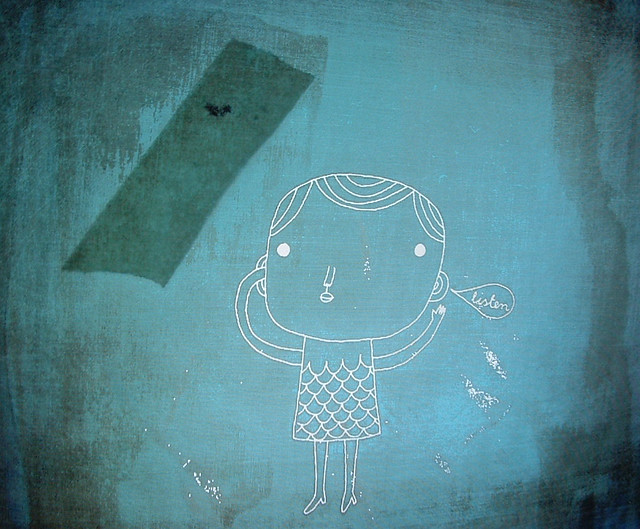
Listen, I am Shabby
"Listen, I am Shabby" by Camilla Engman, on Flickr
Hosea 11:1-4
"When Israel was a child, I loved him, and out of Egypt I called my son. The more I called them, the more they went from me; they kept sacrificing to the Baals, and offering incense to idols. Yet it was I who taught Ephraim to walk, I took them up in my arms; but they did not know that I healed them. I led them with cords of human kindness, with bands of love. I was to them like those who lift infants to their cheeks. I bent down to them and fed them."

Colossians 3:1-3
So if you have been raised with Christ, seek the things that are above, where Christ is, seated at the right hand of God. Set your minds on things that are above, not on things that are on earth, for you have died, and your life is hidden with Christ in God. When Christ who is your life is revealed, then you also will be revealed with him in glory.

Luke 12:13-21
Someone in the crowd said to [Jesus], "Teacher, tell my brother to divide the family inheritance with me." But he said to him, "Friend, who set me to be a judge or arbitrator over you?" And he said to them, "Take care! Be on your guard against all kinds of greed; for one's life does not consist in the abundance of possessions." Then he told them a parable: "The land of a rich man produced abundantly. And he thought to himself, 'What should I do, for I have no place to store my crops?' Then he said, 'I will do this: I will pull down my barns and build larger ones, and there I will store all my grain and my goods. And I will say to my soul, Soul, you have ample goods laid up for many years; relax, eat, drink, be merry.' But God said to him, 'You fool! This very night your life is being demanded of you. And the things you have prepared, whose will they be?' So it is with those who store up treasures for themselves but are not rich toward God."

---
A friend of mine in high school, feeling all wise after taking a semester of psychology, told his mom that she wasn't crazy if she talked out loud to the dog...she was only crazy if she expected a response! (There’s high school hubris for you...)

I wonder, then, what this friend would have said about talking, out loud, to yourself. Do the same rules apply? Is it better to talk in your own head or to talk out loud to yourself? And does it make a difference if you expect a response? I mean...just how much of a conversation can you have with yourself before you ought to go find somebody else to talk to instead?

In today’s gospel, Jesus tells a parable of a rich guy who amongst other problems, has a bad habit of talking to himself.

Did you notice that when this rich man was faced with a conundrum of abundance, his first recourse was to start talking to himself? First, he talks to himself about barns. And then - then! - he starts talking to himself about a future conversation that he plans to have with himself once these barns are completed. He says, “I will (later) say to my soul, ‘Soul, you have ample goods laid up for many years; relax, eat, drink, be merry.’”

While there are plenty of lessons to be learned from today’s parable about wealth and greed and generosity, maybe one of the more important ones for us is a lesson about the danger of staying stuck in your own head.

It turns out that we humans can convince ourselves all sorts of crazy and misguided things when we only talk to ourselves. From the very start of creation, God intended us to be in relationship with other human beings and with God himself. Because it wasn’t good for us to be alone. We need companionship and we really really need God and others to help us see reality. And so things get a little messed up when we ignore those relationships and listen only to the voices in our heads instead.

Because without a reality check from the outside, the voices in our heads can turn dark. At our worst, they can convince us that we are something other than we actually are: beautiful, beloved children of God. It’s the voices in our heads that tell us that we’re weak or undeserving, or too fat or too thin, or unforgivable or unloveable. The voices in our heads are really good at convincing us that it’s okay to take that one more drink, or that it’s okay to treat someone who has hurt us with resentment instead of forgiveness.

And the more we listen to the voices in our heads more than we listen to God and others, we start to believe two big, crazy lies that the rich man in today’s parable came to believe.

First, we start to believe that we don’t actually need anybody else. We start to think that we are totally self-sufficient, and that we can control our own destinies, and that our happiness depends on nothing else but our own efforts. This rich guy had plenty of wealth, plenty of crops, plenty of security for his future. And so his grand plan is to settle down, eat, drink, be merry, and believe that he, of his own accord, had secured a blissful future for himself.

And when we believe that we can do it on our own, we do the same thing. We keep buying stuff that we don’t need, because it makes us happy for a while, and then we buy more stuff when that first round of happiness wears off. We constantly chase wealth and success, and we store up extra toothpaste and canned vegetables and clothes that don’t fit, not because we are so worried about scarcity, but because the more stuff we collect around us, the more we can keep up the illusion that we don’t need anybody or anything outside of our own selves.

If we keep listening to those voices in our heads, unchecked, we start to believe a second big, crazy lie. We start to believe that nobody else needs us. The rich guy had way way way more than he needed to keep himself alive and well. But he never got around to thinking or caring that somebody else out there might need him to share his abundance.

We’re really good at convincing ourselves that nobody needs us. In our worst moments, we convince ourselves of this in despair. When we aren’t feeling so confident or appreciated or valued, we can talk ourselves into a really dark “nobody likes me, everybody hates me, guess I’ll go eat worms” sort of place.

But those voices in our head can also try to convince us that nobody needs us as a defense mechanism against the brokenness around us that is simply too much for us to handle. If we let ourselves believe that nobody needs us, then we don’t need to turn on the news at night and hear about war and scandal. If we believe that nobody needs us, then we can postpone that visit to the neighbor who might just unload all of her loneliness and pain on us. If we are convinced that nobody needs us, then we don’t need to bring food or money to the pantry and risk running into the face of poverty in our midst.

To sum up: Believing the voices that tell us we don’t need anybody puts us in the position of having lots of stuff, with nothing left to need. Believing the voices that tell us nobody needs us puts us in the position of having lots of stuff, with nothing to give.

And these two lies are at the heart of the rich man’s problem. Because thinking of ourselves as an island is a really quick path to greed.

This is where God steps in with a couple of harsh reminders. He nudges us into recognizing our foolishness, and reminds us that we are mortal, and that wealth is fleeing, and that there are plenty of people who have need for our extra stuff and our love and our forgiveness.

God steps in with the voice of Hosea to remind us that we are bound to him and to one another with cords of human kindness and bands of love, and that even if we listen to voices that try to separate us from God and others, God has this compassionate and relentless heart that won’t ever let us go.

God steps in with the voice of Jesus to tell us that our lives do not consist in the abundance of possessions. He shatters the illusion that abundant life is something that we can make for ourselves, or something that we can find within us. He gives us Jesus, the living bread from heaven, who says “I am the way, the truth, and the life,” who says, “I came that they might have life and have it abundantly.” Jesus reminds us that abundant life comes from God, the source, the giver, the merciful, and not from inside our own heads.

God steps in with the voice of Paul to remind us that we have been liberated from ourselves through Christ, and that our old worries and lies and misgivings were trampled by the cross, and that we aren’t captive to the voices in our heads anymore. Paul tells us that we have been raised up, and that our true lives and futures have been revealed in Christ, and that we are children of light and glory and generosity. And so we are no longer bound by voices of greed or anger or abuse or dishonesty.

The good news, friends, is that God has a really big voice. And so no matter how often we fall prey to the conversations we have inside our own heads, God’s voice is always bigger. And he is bent on getting our attention, whether by priests or prophets or judges or disciples or apostles or the words of Jesus, or the loud sound of hammer to cross, or the sound of a rock sliding away from an empty tomb, or the rush of the Spirit across our ears.

And the voice of God is always a voice of freedom. It tells you that you are free to love others and let them love you. It tells you that you are free to give yourself away because God will always come back to you with an abundance of love, mercy, and compassion. The voice of God tells you that you are loved and beloved, that you are not alone, that you are very much needed and valued, and that you have good to offer this broken world.

So come to this table today, and hear the voice of Christ that says, “This is my body and my blood, given for you.” Hear these words and feast on the bread of life. There is plenty for all. At this table, we eat, and we drink, and we can be joyful, because we know that our lives belong to God, and not to ourselves. There is no need to worry. There is no need to fear. Life is here, waiting for you. It is abundant. It is free. It is enduring. It is the sweet taste of grace. It is the sweet voice of love.

7.10.2013

Let's talk about babies

For the last five years of my life, something has been happening in the background.

You've heard a lot in this space about my journey through seminary and internship, and my first years of being a pastor. You've heard about my family and some of my vacations, my love for baseball and knitting, my thoughts on dialogue and division, and my crazy idealism for the world we live in. Recently, because I've been busy, you've mostly gotten lots and lots of sermon transcripts.

But behind all of this, for the last five years, Matt and I have been on a long journey to try to start a family.

It has been quite a journey. A journey that has included frustration and tears, losses and medical interventions, countless needle-stabs and blood draws, surgeries (major and minor), and through it all, enough peace in our hearts to keep stepping forward, one day at a time, without counting up our fears or losses or heartbreaks. Which is not to say that there weren't bad days (there were plenty), or that we had the strength or gumption to keep pressing ahead indefinitely (there comes a point when you have to start thinking about stopping, for the sake of your sanity).

I wouldn't wish this journey on anyone. And yet, as I have come to learn, this journey is so very common, and nobody really knows it.

There have been lots of blessings to come out of this journey that wouldn't have happened otherwise. I have made new friends and built new relationships with others who have struggled, just like we have. Friends of mine have come out of the woodwork to share with me their own stories of infertility and pregnancy loss. I have been forced to think - deeply! - about what I hope my life will look like, and what pieces of my body and soul I am willing to make vulnerable in order to pursue those hopes and dreams. I would venture a guess that Matt and I are closer and better because of all of this, and that our relationship is in a deeper place than we could ever have expected it to be after 8.5 years of marriage. I've been forced to be emotionally vulnerable (in a good way), and to learn to ask for/accept help (which I'm terrible at). Spiritually, I've run the gamut from praying fervently with hope to shouting at God in absolute anger. I've connected to Bible stories in far different ways, especially stories of barren women, but also stories of finding peace in trial, and finding kindred spirits in all those in the Bible who felt they had no other option but to cry out to God and put themselves out there, because they had no other choice.

But don't be mistaken. These beautiful and unforeseen blessings do not, in any way, make this path easier. They don't make this journey "better." They don't redeem the pain and frustration of spending so much time, money, and energy trying to accomplish something that should be simple; something that biology has been making happen since the start of the human race. Infertility and pregnancy loss are HARD.

As we crossed over into 2013, there were lots of transitions on the horizon. I had just accepted a new call, which meant leaving a church I loved in order to follow God's call to a new church that I was excited to love. Goodbyes and hellos are hard. Even (especially!) the good ones. Also, this new church was in a new town in a new state...putting me five hours from most of my family and from the Chicagoland that is a HUGE part of who I am. Moving is my least favorite thing ever, because it involves packing, and so there was plenty of stress on the horizon as I packed both our apartment and my office, and as we went house-hunting in Decorah, and as we tried to make the most of our last weeks in Chicago before moving.

During this time of crazy transitions, we also decided to take one more (last?) shot at a round of IVF. We'd done a few cycles before, and still had a couple embryos frozen, and we decided (with the encouragement and blessing of my doctor), to try one last round before we moved away (and out of his care).

My official start date here at First Lutheran was March 1. I preached my first sermon here on Sunday, March 3. I spent Monday and Tuesday of that week trying to get my office unpacked and set up. And then on Wednesday, we drove back to Chicago, because that Thursday was my embryo transfer (the culmination of a month-plus cycle of medications and monitoring). The timing of the cycle and the transfer was certainly not ideal. It was just another thing to add to all the madness of moving and starting a new job and closing on a house.

But for some crazy reason, the absolute wrong time turned out to be the absolute right time. And so two weeks after starting my new job, we found out that one of those little embryos had stuck around, and we were pregnant. Thrilling news, and terrifying. Because once you've experienced a loss, it takes a long time for you to actually believe that the pregnancy is going to last. Between then and now, there have been plenty of anxious days. Plenty of worry and wonder. Plenty of huge sighs of relief every time blood draws showed my hormone levels going up, and every time my doctor has been able to easily find a heartbeat at our monthly appointments.

It took us until week 13 to start telling close family and friends. It took us until week 16 to share the news with the congregation. And it took us until week 17 to go public. For as much as your head knows that, statistically, chances of loss after 13, 16, 17 weeks are incredibly low, your heart still worries that you will (continue to) be the exception to the rule, the person who keeps defying the odds in the wrong way.

But it's getting harder and harder to worry, and easier and easier to believe that THIS IS HAPPENING. FOR REAL. We crossed the 20-week mark over the weekend (halfway there!), and had our big mid-pregnancy ultrasound yesterday. And yes. There's a baby in there. A baby with arms and legs that move and kick, a baby with a little heart beating away in its chest, a baby with teensy toes and little lips, who is just starting to get big enough for me to feel it when it tumbles and flips and kicks.

I can't completely shake my fears that things still might go wrong, but I am also learning, day by day, how to really enjoy this good news. I'm learning how to let other people be happy for me. I'm learning how to settle in and act and feel like your everyday, average pregnant lady. And honestly, I keep feeling a huge sense of relief to know that the news is now out there for all to know. I feel like I've been keeping huge secret after huge secret for these last five years. For so many good reasons, we've kept this whole journey pretty quiet. But now that we've crossed over in time to be closer to birth than to conception, I am really happy, not only to be talking about a BABY!, but also to be a little more candid about the road we've traveled to get to this point.

Wow. Lots of words in this post. Makes sense. There's a lot that's been bottled up for a long time. Feels good to put it all out there. As a reward for wading through all of this, how about a picture? Enjoy!

20-week ultrasound! We chose not to learn hedgehog's gender - we are into surprises. Still plenty amazing to look at this picture and see an obvious baby! This is starting to feel real. Also, see the arm up by the face? Hedgehog did NOT want their picture taken. Haha!

7.07.2013

7 Pentecost: Leaving ourselves behind

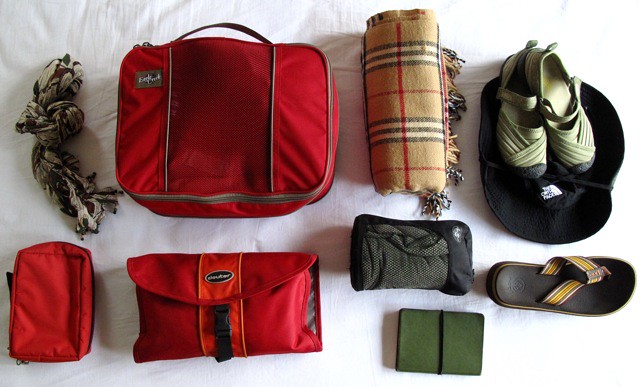
what i usually pack
"what i usually pack" by pinay traveller, on Flickr
2 Kings 5:1-5a, 9-14
Naaman, commander of the army of the king of Aram, was a great man and in high favor with his master, because by him the LORD had given victory to Aram. The man, though a mighty warrior, suffered from leprosy. Now the Arameans on one of their raids had taken a young girl captive from the land of Israel, and she served Naaman's wife. She said to her mistress, "If only my lord were with the prophet who is in Samaria! He would cure him of his leprosy." So Naaman went in and told his lord just what the girl from the land of Israel had said. And the king of Aram said, "Go then, and I will send along a letter to the king of Israel."

So Naaman came with his horses and chariots, and halted at the entrance of Elisha's house. Elisha sent a messenger to him, saying, "Go, wash in the Jordan seven times, and your flesh shall be restored and you shall be clean." But Naaman became angry and went away, saying, "I thought that for me he would surely come out, and stand and call on the name of the LORD his God, and would wave his hand over the spot, and cure the leprosy! Are not Abana and Pharpar, the rivers of Damascus, better than all the waters of Israel? Could I not wash in them, and be clean?" He turned and went away in a rage. But his servants approached and said to him, "Father, if the prophet had commanded you to do something difficult, would you not have done it? How much more, when all he said to you was, 'Wash, and be clean'?" So he went down and immersed himself seven times in the Jordan, according to the word of the man of God; his flesh was restored like the flesh of a young boy, and he was clean.


Luke 10:1-11, 16-20
After this the Lord appointed seventy others and sent them on ahead of him in pairs to every town and place where he himself intended to go. He said to them, "The harvest is plentiful, but the laborers are few; therefore ask the Lord of the harvest to send out laborers into his harvest. Go on your way. See, I am sending you out like lambs into the midst of wolves. Carry no purse, no bag, no sandals; and greet no one on the road. Whatever house you enter, first say, 'Peace to this house!' And if anyone is there who shares in peace, your peace will rest on that person; but if not, it will return to you. Remain in the same house, eating and drinking whatever they provide, for the laborer deserves to be paid. Do not move about from house to house. Whenever you enter a town and its people welcome you, eat what is set before you; cure the sick who are there, and say to them, 'The kingdom of God has come near to you.' But whenever you enter a town and they do not welcome you, go out into its streets and say, 'Even the dust of your town that clings to our feet, we wipe off in protest against you. Yet know this: the kingdom of God has come near.' Whoever listens to you listens to me, and whoever rejects you rejects me, and whoever rejects me rejects the one who sent me.

The seventy returned with joy, saying, "Lord, in your name even the demons submit to us!" He said to them, "I watched Satan fall from heaven like a flash of lightning. See, I have given you authority to tread on snakes and scorpions, and over all the power of the enemy; and nothing will hurt you. Nevertheless, do not rejoice at this, that the spirits submit to you, but rejoice that your names are written in heaven."

---

We waited until the last pre-trip meeting to give out the packing list for the high school group summer trip. The group was heading up to the Wilderness Canoe Base in northern Minnesota, to spend a week helping the staff at base camp clean up after a stretch of devastating forest fires.

The problem with the packing list wasn't what it said to bring.

The problem with the packing list is what was what it said not to bring. No cell phones or iPods or electronics to distract us from the tasks ahead of us. No flip flops or open-toed shoes, in order to keep us safe on the uneven terrain. No food or candy in the cabins so that we didn't attract critters to our cabins. But the worst thing? No shampoo or soap, because there were no showers, because showers waste water, and soap and shampoo pollute the delicate wilderness ecosystem.

As expected, the high schoolers reacted to this packing list with wide eyes. No cell phones or flip flops? No soap or shampoo? It was as if we had asked them to leave their very selves behind.

Something very similar happens in today’s gospel reading.

Jesus is preparing disciples for a great wave of ministry. Not just the twelve famous disciples, but nearly sixty others as well. They are all about to be commissioned to go into towns and villages to cure diseases, cast out demons, and call people to repentance in Jesus name. As they prepare to set out, Jesus gives them a few last-minute instructions. First, go in pairs. Second, don’t take anything with you, no purse or bag or sandals. Third, freely receive and reward the hospitality of strangers.

Yes, Jesus sends the disciples out with his own what-not-to-pack list. It’s not just luxuries and comfort items that he asks them to leave behind. He asks them to leave behind things essential to their survival. No money means no resources to buy food or lodging. No bag means no means of carrying extra supplies. No sandals means a slow, dusty journey, and means extra-dirty feet for the hosts of households to wash when taking them in.

There is nothing glamorous about the disciples’ mission. Jesus sends them out as plain, vulnerable souls who will be forced to let go of their pride and to trust both God and strangers to provide for them along their journey. When Jesus tells the disciples to leave everything behind, I imagine that they stared back at him with wide eyes. I imagine that it felt as if Jesus had asked them to leave their very selves behind.

Because being empty-handed is a hard calling. We humans don’t like to be left unprepared. It’s why we collect so much of stuff around us, stuff that we hold onto “just in case,” like junk drawers filled with old receipts and cords, or boxes of clothes packed away in the basement, or the secret stash of chocolate we hide in the freezer. We overeat or overwork or overcompensate to create a buffer between ourselves and our fears of failure. We don’t want to find ourselves lacking anything.

Whether we know it or not, we collect all of this stuff as a way of minimizing our vulnerability and resisting reliance on God and one another. We use abundance and self-reliance as both buffer and crutch. Because it’s the message we ear all the time: More is better. You can have it all if you just want it enough. You can do it yourself. Thick skin is a sign of strength. Abundance is a sign of success.

And all the stuff we collect up around us becomes the stuff that defines us. We become our clothes and our homes and our cars and our jobs and our ambitions and our hobbies. And to leave any of this behind means leaving behind our very selves. And that makes us vulnerable. And vulnerable is uncomfortable.

And...I think this is exactly the point of today's gospel. Letting go, leaving behind, is vulnerable work. It is vulnerable to think about leaving ourselves behind to become the unequipped disciples that Jesus sends out. It is vulnerable work to let go of belongings, certainty, and self-reliance for the sake of Christ's mission. It is vulnerable to clear away the clutter to regain a clear view of God in the world. It is vulnerable business to leave ourselves behind so that God can take center stage.

But it is precisely in our vulnerability that we see God's strength. It is precisely in the vulnerable gap between what we have and what we need that God steps in to do his deepest work.

In the uncomfortable gap between what the disciples carried and what they actually needed, God filled the space with acts of power and radical hospitality from strangers. In the uncomfortable gap between Naaman's prideful expectation of being healed by an amazing act of power and Elisha's simple instructions to bathe in the river, God filled the space with healing, wholeness, and refreshment. In the uncomfortable gap between the luxuries the high schoolers wanted and the stripped down bags they actually packed, God filled the space with changed hearts and new eyes to see the splendor of God in his creation.

Did you notice what happened when the disciples returned to Jesus after their mission? They fell all over themselves to share with Jesus the exciting things that they had seen and done. They told about their adventures, and rejoiced over the work that they had done, and shared stories of hospitality...and never once talked about what they lacked or left behind.

The same thing happened with that group of high schoolers. They returned home from their trip telling stories about pulling up brush and debris around camp to protect the land from future forest fires, and they talked about picking wild blueberries and playing in the lake, and they rejoiced in new friendships and told of being moved by God during campfire devotions...and never once talked about what they lacked or left behind.

Isn't this all very good news for us? We have the assurance that God steps in to fill the gaps. We have hope that God works deeply through our vulnerability. We have security in a God who comes to define us when we leave all else behind.

Because we have a God who, through the vulnerability of the cross and the emptiness of the tomb, brings us strength from weakness, life form death, power from insecurity, and hope from chaos. And we have a community of faith right here, where we can splash in the water of our baptisms, and to eat the bread and wine that draw us into the communion of Christ's body, so that we can find the strength to get over the idea that we can or should do it all ourselves, and instead go out to pursue lives of getting the heck out of the way, so that God's spirit can have the freedom and space to blow through our lives.

So what is it in your own life that you need to get rid of so that God can move freely in your life? What items in your schedule need paring down or what ambitions do you need to rethink? What patterns of spending your time or money do you need to change? What emotions, biases or hardness of heart do you need to acknowledge and clear away?

What is God just itching to do in and through you once you become willing to leave yourself behind for his sake?

My friends, it is time to leave yourself behind. To commend your spirit into God's hands. To put away every "just in case" bag that you've packed in your life and to take nothing else with you on your life's journey besides God's mercy. It is time to feel the wind of the spirit blowing through your empty fingers, leading you to new people and new places. For once we leave ourselves behind, we have the joy of feeling the stirrings of our unhindered God moving in us and through us, animating our souls. Don't you want to be free to see where he leads?

6.16.2013

4 Pentecost: Getting what we don't deserve

Justice's Scales
"Justice's Scales" by estenh, on Flickr
1 Kings 21:1-10; 17-21
Later the following events took place: Naboth the Jezreelite had a vineyard in Jezreel, beside the palace of King Ahab of Samaria.  And Ahab said to Naboth, "Give me your vineyard, so that I may have it for a vegetable garden, because it is near my house; I will give you a better vineyard for it; or, if it seems good to you, I will give you its value in money." But Naboth said to Ahab, "The LORD forbid that I should give you my ancestral inheritance." Ahab went home resentful and sullen because of what Naboth the Jezreelite had said to him; for he had said, "I will not give you my ancestral inheritance." He lay down on his bed, turned away his face, and would not eat. His wife Jezebel came to him and said, "Why are you so depressed that you will not eat?" He said to her, "Because I spoke to Naboth the Jezreelite and said to him, 'Give me your vineyard for money; or else, if you prefer, I will give you another vineyard for it'; but he answered, 'I will not give you my vineyard.'" His wife Jezebel said to him, "Do you now govern Israel? Get up, eat some food, and be cheerful; I will give you the vineyard of Naboth the Jezreelite." So she wrote letters in Ahab's name and sealed them with his seal; she sent the letters to the elders and the nobles who lived with Naboth in his city. She wrote in the letters, "Proclaim a fast, and seat Naboth at the head of the assembly; seat two scoundrels opposite him, and have them bring a charge against him, saying, 'You have cursed God and the king.' Then take him out, and stone him to death." Then the word of the LORD came to Elijah the Tishbite, saying:  Go down to meet King Ahab of Israel, who rules in Samaria; he is now in the vineyard of Naboth, where he has gone to take possession.  You shall say to him, "Thus says the LORD: Have you killed, and also taken possession?" You shall say to him, "Thus says the LORD: In the place where dogs licked up the blood of Naboth, dogs will also lick up your blood." Ahab said to Elijah, "Have you found me, O my enemy?" He answered, "I have found you. Because you have sold yourself to do what is evil in the sight of the LORD, I will bring disaster on you."

Luke 7:36-50
One of the Pharisees asked Jesus to eat with him, and he went into the Pharisee's house and took his place at the table. And a woman in the city, who was a sinner, having learned that he was eating in the Pharisee's house, brought an alabaster jar of ointment. She stood behind him at his feet, weeping, and began to bathe his feet with her tears and to dry them with her hair. Then she continued kissing his feet and anointing them with the ointment. Now when the Pharisee who had invited him saw it, he said to himself, "If this man were a prophet, he would have known who and what kind of woman this is who is touching him — that she is a sinner." Jesus spoke up and said to him, "Simon, I have something to say to you." "Teacher," he replied, "speak."  "A certain creditor had two debtors; one owed five hundred denarii, and the other fifty. When they could not pay, he canceled the debts for both of them. Now which of them will love him more?" Simon answered, "I suppose the one for whom he canceled the greater debt." And Jesus said to him, "You have judged rightly." Then turning toward the woman, he said to Simon, "Do you see this woman? I entered your house; you gave me no water for my feet, but she has bathed my feet with her tears and dried them with her hair. You gave me no kiss, but from the time I came in she has not stopped kissing my feet. You did not anoint my head with oil, but she has anointed my feet with ointment. Therefore, I tell you, her sins, which were many, have been forgiven; hence she has shown great love. But the one to whom little is forgiven, loves little." Then he said to her, "Your sins are forgiven." But those who were at the table with him began to say among themselves, "Who is this who even forgives sins?" And he said to the woman, "Your faith has saved you; go in peace."
---

Chris was the biggest kid in his kindergarten class. He was tall and thick, square-shouldered and heavy compared to his classmates. He was a sweet kid but a handful, And he always started to get a little tired and moody by the time the after-school program began.

Chris, as many young children do, had a strict sense of justice and fairness. Things were supposed to be black-and-white, and even, and everybody was supposed to get the same stuff. If other boys in the after-school program were playing the board game Trouble and they hadn’t yet given him a turn to play, he’d get angry, because he deserved a turn, too. At snack time, if everybody else got a whole, unblemished pretzel rod, then it wasn’t fair to give him two broken pieces, even if those pieces amounted to more food when you put them together.

And then there was the day that he was standing in line at the vending machine, to buy a can of juice. The boy in front of him put in his dollar, hit the button, and in a moment of lucky malfunctioning, they machine dropped two cans into the drawer instead of one. Excited, Chris put his dollar in next, and hit the button...and only one can came out. No matter that the machine was only supposed to give you one can. The machine had given his friend two cans, and it just wasn’t fair. That might have been Chris’s biggest meltdown all year.

But it’s nothing compared to the meltdown that Ahab has in our first reading. He, too, is bent on getting what he wants, and getting what he thinks is fair, and he throws one heck of a tempter tantrum when things don’t go his way.

He wants this piece of land owned by a man named Naboth. This isn’t just any piece of land. It is fertile, and rich, and right in Ahab’s backyard. Ahab really really wants this land. He’s really excited to plant a vegetable garden there. So he offers Naboth fair compensation for it. He'll give him a better vineyard somewhere else, or cash if Naboth would prefer. And Ahab completely expects Naboth to sell. Because hey, he's offering him a really good deal!

But Naboth doesn’t want to sell, and it has nothing to do with money. His land isn’t just beautiful and fertile, it is also a place of blessing and ancestry. The name of the land, Jezreel, literally means, “God planted,” and Naboth isn’t about to give it up. So Ahab stomps off, angry and sullen. He throws himself on his bed like a petulant child, turning his face to the wall, refusing to eat.

Then Jezebel walks in, and says "What kind of a king are you, anyway?" and, God save her, takes matters into her own hand. She uses Ahab's power to forcibly take the land, because hey, he's the all-powerful king, and he can get whatever he wants, and it's Naboth's fault for not accepting the good deal in the first place.

Can you find yourself in this story? I know that I can. Pouting when we don't get what we want? Check. Getting angry when we don't get what we think we fairly deserve? Check. Believing that we should always be able to find a way to make things go our way? Check. Exploiting our own corners of power, big or small, to stack the deck in our favor? Check.

The human inclination is to act as Ahabs and Jezebels, demanding that things live up to our own desires. The human inclination is to put God on the side of what we think we deserve.

This is why God sends prophets like Elijah to give us the pesky news that God isn't in the business of getting you what you want and God is definitely not in the business of coddling the rich and the powerful. God is in the business of divine justice, of righting the world, of lifting up the poor and lowly and raising the stooped shoulders of the broken and sinful.

This is the heart of the conflict in today's Gospel reading. When Simon gets angry about the woman who burst into his house, it's not because she interrupted his VIP dinner or because she bucked social convention about how women were to act around men in polite society. No, the thing that really gets Simon's goat is that this woman is a sinner, and how dare Jesus show her love and forgiveness! God's favor was reserved for the faithful and the respectable, those who were deserving of it! How could this Jesus claim to forgive her sins and then treat her with the same honor as the truly respectable company around the table? It simply isn't fair.

So Jesus asks Simon, "If there were a money lender who was owed debts by two different people, and one of those debts was a matter of lunch money, while the other of those debts was a matter of a year's salary, and he forgave them both their debts, cancelling what they owed, which would be more grateful?"

And Simon, channeling the petulence of Ahab, rolls his eyes and says with a sigh, "I suppose the one with the larger debt."

"Then," Jesus says, "since her sins, which were many, are forgiven, she has shown much love."

The very core of the prophetic message spoken by Elijah and Jesus today is that God doesn't care a lick about what is "fair." God cares about being lavish with mercy and forgiveness, and being overwhelmingly concerned for the plight of those who are weak or tired or powerless; especially all of us sinners. We, who at one time were weighed down by sin and death, have been forgiven much through Christ, not because we deserve it, but because God is gracious. And so, just like the woman washing Jesus' feet, out of our forgiveness we are called to love and love much in our world; to be prophetic voices that proclaim God's upside-down, generous brand of justice.

The author N.T. Wright, in a recent interview, said, "The point of justice and mercy...is not ‘they deserve it’ but ‘this is the way God’s world should be’, and we are called to do those things that truly anticipate the way God’s world WILL be."

And so we are called to be prophets in our own world, speaking and acting out the way that God's world should and will be. We are called challenge our human inclination toward retribution. We are called to challenge our world's systems of power and reward. We are called to pursue relentless compassion. We are called to live with less so that those in need can live with more. We are called to be generous, both in material and in mercy. We are called not merely to be "fair," but to be symbols of hope for God's deep, divine justice, which raises up the weak and liberates the oppressed.

As theologian Jurgen Moltmann says, "Faith, wherever it develops into hope, causes not rest but unrest, not patience but impatience. It does not calm the unquiet heart, but is itself this unquiet heart in man. Those who hope in Christ can no longer put up with reality as it is, but begin to suffer under it, to contradict it. Peace with God means conflict with the world, for the goad of the promised future stabs inexorably into the flesh of every unfulfilled present" (Theology of Hope).

May the rich unfairness of God's love and forgiveness cause you to live with hope, each and every day. May you grow ever more deeply dissatisfied with reality as it is. May your heart be made restless by the peace of Christ. And may you find your own prophetic voice, to speak mercy and compassion into this unfulfilled present, drawing our world ever-closer to God's perfect, promised future.

6.09.2013

3 Pentecost: Hitting bottom

Look up, look down
"Look up, look down" by wesley peyton, on Flickr
Then the word of the LORD came to [Elijah], saying, Go now to Zarephath, which belongs to Sidon, and live there; for I have commanded a widow there to feed you. So he set out and went to Zarephath. When he came to the gate of the town, a widow was there gathering sticks; he called to her and said, "Bring me a little water in a vessel, so that I may drink." As she was going to bring it, he called to her and said, "Bring me a morsel of bread in your hand." But she said, "As the LORD your God lives, I have nothing baked, only a handful of meal in a jar, and a little oil in a jug; I am now gathering a couple of sticks, so that I may go home and prepare it for myself and my son, that we may eat it, and die." Elijah said to her, "Do not be afraid; go and do as you have said; but first make me a little cake of it and bring it to me, and afterwards make something for yourself and your son. For thus says the LORD the God of Israel: The jar of meal will not be emptied and the jug of oil will not fail until the day that the LORD sends rain on the earth." She went and did as Elijah said, so that she as well as he and her household ate for many days. The jar of meal was not emptied, neither did the jug of oil fail, according to the word of the LORD that he spoke by Elijah. After this the son of the woman, the mistress of the house, became ill; his illness was so severe that there was no breath left in him. She then said to Elijah, "What have you against me, O man of God? You have come to me to bring my sin to remembrance, and to cause the death of my son!" But he said to her, "Give me your son." He took him from her bosom, carried him up into the upper chamber where he was lodging, and laid him on his own bed. He cried out to the LORD, "O LORD my God, have you brought calamity even upon the widow with whom I am staying, by killing her son?" Then he stretched himself upon the child three times, and cried out to the LORD, "O LORD my God, let this child's life come into him again." The LORD listened to the voice of Elijah; the life of the child came into him again, and he revived. Elijah took the child, brought him down from the upper chamber into the house, and gave him to his mother; then Elijah said, "See, your son is alive." So the woman said to Elijah, "Now I know that you are a man of God, and that the word of the LORD in your mouth is truth." (1 Kings 17:8-24)

Soon afterwards [Jesus] went to a town called Nain, and his disciples and a large crowd went with him. As he approached the gate of the town, a man who had died was being carried out. He was his mother's only son, and she was a widow; and with her was a large crowd from the town. When the Lord saw her, he had compassion for her and said to her, "Do not weep." Then he came forward and touched the bier, and the bearers stood still. And he said, "Young man, I say to you, rise!" The dead man sat up and began to speak, and Jesus gave him to his mother. Fear seized all of them; and they glorified God, saying, "A great prophet has risen among us!" and "God has looked favorably on his people!" This word about him spread throughout Judea and all the surrounding country.(Luke 7:11-17)


---
The story of Elijah and the widow of Zarephath is an old favorite of mine. I remember listening to Bible story tapes before bed as a child, and even to this day distinctly remember hearing about the jar of meal that wouldn’t run out and the jug of oil that was never emptied. I think that I imagined the neverending jug of oil as something similar to a fake glass of orange juice that came as part of a toy kitchen set; the glass was double-walled and between those two walls was the fake orange juice. When you tipped the cup, the liquid disappeared as if you were drinking it or pouring it out. But when you righted the glass, the liquid ran back, “refilling” the cup. I was pretty sure as a kid that the jug of oil functioned exactly like that glass.

But here’s the thing. This story of Elijah and the widow? The Sunday School version of the story only talks about the flour and the oil. Because it’s the fun part of the story: the awesome amazing miracle that leaves everybody happy. But as you know from today’s first reading, there’s more to the story. And it’s not particularly happy. The whole thing is actually a little gritty; when you look at the details, it’s really a story about hitting bottom.

To set the stage, we have to back up one chapter to 1 Kings 16, where we hear about the unfaithfulness of King Ahab. He has hit a new low in unfaithfulness, being deemed the king who has “done more to provoke the anger of the Lord…than had all the kings of Israel who were before him.”

In response, God has sent a drought upon the land as judgment for Ahab’s unfaithfulness. This means that a whole nation is in peril, as creeks dry up and crops wither away. Times are dire.

It is at this point that we meet the widow of Zarephath. She, through no fault of her own, is hovering close to the bottom. For starters, she is a widow. This means that she has no voice, no portion, and no protection outside of her only son. More than that, because of the lingering drought, her knuckles have been scraping the bottom of her jar of meal for days now, and on this particular day when Elijah shows up, she is gathering sticks to build a fire and prepare a last meal for herself and her son.

The audacity, then, of Elijah to prevail upon her, even after hearing her dire story, and insist that she first feed him. Perhaps she is moved to compassion by a fellow human being who knows hunger and thirst. Perhaps she is naively wooed by Elijah’s impossible promise of neverending flour and meal as a reward. Perhaps she has been so beaten down in life that she knows nothing other than being taken advantage of.

But there, at the very bottom, she makes that small cake for Elijah, prepares the rest of her stores for herself and her son, and come the next day, she finds that the jar which she thought she’d emptied still had flour in it, and the jug that she thought she’d poured out still had oil in it. Once at the very bottom, at the brink of death, she was now able to feed herself and her household indefinitely, rewarded by God for her hospitality and faithfulness.

It would be wonderful if this were the end of the story. Then I’d get to preach a sermon about how God comes through for us when it looks like we have nothing. Or about how God gives us the strength to be generous even in our times of scarcity.

But the story marches on. Barely have we had time to rejoice in the miracle of the flour and oil when the widow’s son falls ill. Ill to the point of death. There is no breath left in him.

If starving to death seemed like hitting bottom, then this tragedy has plummeted the widow through the floor into the basement below. Dying of starvation in the midst of a drought is one thing. A widow losing her only son, her only protection, her only hope, is quite another. Mixed-up together is the pain of grief, the fear for her future, and the shock and whiplash of being saved from death only to be cast at its feet.

“What have you against me?” she asks Elijah. “Why have you saved us with the miracle of food only to rip my only son from me?”

She has, once again, hit the bottom.

This is a cycle that we are all familiar with, in some fashion or another. Cycles of good news and bad news that repeat, cycles of depression that follow moments of joy, times when tragedies and deaths pile up one after another, times when we pull ourselves up and out of bad habits or addictions and then fall back into them again.

The widow of Zarephath, like the widow of Nain or Job or any other Bible character who has had their hope pulled out from under them, raises the question with us, “Where is God when we have hit bottom? Where is God when we have absolutely nothing left?”

Where is God when long winters and cold, rainy springs threaten our farms and livelihoods? Where is God when we have a good, new job in a new town, but not the money to pay the security deposit on an apartment to move there? Where is God when we grieve children who have died so many years too soon?

Where is God when we have absolutely nothing left? When we have hit bottom? One answer would be that when we hit bottom, God pulls us up.

This is certainly what happens in our readings today. Elijah cries out to God and the widow of Zarephath’s son is raised from the dead. Jesus has compassion on the widow of Nain and her son is raised from the dead.

So the simple answer here might something like God always brings life out of our death, and when we hit the very bottom and have nothing left, God shows up to give us back our lives. And I believe this is true. This is the hope that I cling to when the world around me seems too far gone.
But I think that there is a deeper, more satisfying, and perhaps even more faithful answer to the question of “Where is God when we have hit bottom and have nothing left?”

The answer is that God is with us. Always. No matter what. This is the heart of the good news in our readings today.

Elijah, at the death of the widow’s son, didn’t give her any trite assurances. He didn’t get defensive when she challenged him. He didn’t get up and walk away. Elijah, the man of God, the man serving as the mouthpiece of the Lord, went to the child and grieved, right alongside the widow. He cried out to God even as he was a walking, talking, weeping symbol of God’s presence, even there at the very bottom.

And Jesus, seeing the funeral procession heading out of town, took one look at the grieving widow and was moved to compassion. Nobody asked him to perform a miracle. Nobody called him over to the weeping crowds. Jesus took it upon himself to walk into the middle of the grief, and to care for this widow, this stranger, in her time of need. Jesus didn’t ignore the crowds, nor did he shoot off a miracle from afar. He put himself right in the center of grief, walking along the road with those who had hit the very bottom of their grief.

And so even as we cling to this everlasting hope that Christ is our resurrection, and that through him we have the power to know life even in our moments of grief and death, we also take yet greater comfort in knowing that God is never far off from us. That no matter how hard we hit the bottom, God doesn’t forget us. As it says in Romans, “For I am convinced that neither death, nor life, nor angels, nor rulers, nor things present, nor things to come, nor powers, nor height, nor depth, nor anything else in all creation, will be able to separate us from the love of God in Christ Jesus our Lord.”

For I am convinced that nothing in all creation will be able to separate us from the love of God. That is sublimely good news. And it is the heart of our Christian witness.

Because the heart our faith isn’t to naively promise everybody that everything will be just peachy; that life with God will always be good and happy and satisfying. The heart of our faith is to preach a Christ who walked with us to the point of death, who fed us a last meal in his dying days that might sustain us in our dying days, who promised never to leave us nor forsake us.

New creation is coming, yes. But while we wait, we have companionship with a God who is as unfailing as that jar of meal and that jug of oil. A God who pours himself out for us and is never spent. A God who never runs dry. A God who stands with us on the mountain peaks and weeps with us at rock bottom.

So eat this meal today, the flour and the oil of everlasting hope. Trust in a God who will not fail you. Take comfort in a savior who sees you with compassion, and who promises to walk with you every step of this life. Be sustained by God’s love, which will not fail.