If you were to take a serious look at my online presence - Facebook, Twitter, Blogger - you would find that I am a horribly predictable person. Every Friday (my day off), there is a greater than 90% chance that I tweet or put up a FB status about what I plan to do with my day. Or a summary tweet in the afternoon talking about what I had already accomplished. Same goes for Saturdays when I have them free.
And that list of activities will always include at least two of the following: knitting, going to the Arboretum, going out for coffee, watching baseball, going to the farmer's market, or cooking/baking
If you were to expand out a bit and look at my day-to-day tweets and status updates, you'd find that more than half of them have to do with coffee (or tea), Bach, reading, writing, and eating.
I am one predictable and easy-to-figure out lady.
But here's the thing. I know what I like. And I know what feeds my soul. And I know what brings me balance.
Reading/writing: An old favorite. I love words. I love finding perfect words to describe what I'm seeing, thinking, or feeling. I love seeing how other people use words. This is probably also why I love writing sermons...
Knitting: It is the only form of visual art that I am good at. I am fascinated by color, I love touching soft things, I like that I can make something beautiful with my own two hands, and I am fascinated by the way that projects take shape. Bonus: I knit to knit, which leaves me with leftover projects without homes, which is GREAT for gift-giving.
Coffee: I blame my genetics for my love of coffee (the substance). I blame a particular group of high school friends for my love of coffee shops. Coffee is delicious, and going out for coffee is a change of pace and a change of scenery. So I use my coffee outings purposefully. I'm also very productive at coffee shops, so much sermon-writing happens there.
Cooking/baking/FOOD: I love eating. And if I love eating good food, then it follows that I love trying my best to MAKE good food. Part of it is the proud, creative, "I made this" feeling that also applies to knitting. And food is how my family celebrates and reunites. So cooking is about food and about sharing.
J.S. Bach: My favorite composer, hands-down. Fun to sing, fun to play, great to listen to. And something about Bach's music strikes me as profoundly ordered...and profoundly creative within that order. So it's definitely balance-restoring for me.
Morton Arboretum: A place I went to as a child, and now a place that is right up the road from where we live. Trees. Flowers. Hiking paths. Lots of land, so that even on crowded days, I can walk and hike and be all by myself. A great place to wander, or to bike, or to have a picnic. A fantastic place to bring my camera and pretend I'm a great nature photographer. And a great place to sit outside for a while, since we don't have a house with a lawn or anything right now.
So anyway, now you know a little more about my favorite things. I don't mind that I do nearly the same thing every weekend. And I don't mind that I tweet about it, even if there's nothing new under the sun to say about it.
How about you? What are the things that you come back to, over and over again, that bring you joy and peace and balance?

Showing posts with label books. Show all posts
Showing posts with label books. Show all posts
7.30.2012

8.22.2011
A manifesto for questioning Christians
Thanks to Wendell Berry and his brilliant character Jayber Crow (from the novel by that same name) for putting into words the way that questions shake and shape our faith, or perhaps, become our faith.
Questions all of a sudden were clanging in my mind like Edgar Allan Poe's brazen alarum bells. I still believed in the divinity and the teachings of Jesus...but it got so I couldn't open a bible without setting off a great jangling and wrangling of questions that almost deafened me.
If we are to understand the Bible as literally true, why are we permitted to hate our enemies? If Jesus meant what He said when we should love our enemies, how can Christians go to war? Why, since He told us to pray in secret, do we continue to pray in public? Is an insincere or vain public prayer not a violation of the third commandment? And what about our bodies that always seemed to come off so badly in every contest with our soul? Did Jesus put on our flesh so that we might despise it?
But worst of all was when it hit me that Jesus' own most fervent prayer was refused: "Father, if thou be wiling, remove this cup from me: nevertheless not my will, but thine, be done." I must have read that verse or heard it a hundred times before without seeing or hearing. Maybe I didn't want to see it. But then one day I saw it. It just knocked me in the head. This, I thought, is what is meant by "thy will be done" in the Lord's Prayer, which I had prayed time and again without thinking about it. It means that your will and God's will may not be the same. It means there's a good possibility that you won't get what you pray for. It means that inspite of your prayers you are going to suffer. It means you may be crucified.
After Jesus' terrible prayer at Gethsemane, an angel came to Him and gave him strength, but he did not remove the cup.
Before that time I may have had my doubts about public prayers, but I had listened to them complacently enough, even when they were for the football team. I had prayed my own private prayers complacently enough, asking for things I wanted, even though I knew well already that a lot of things I wanted I was not going to get, no matter how much I prayed for them. (Though I hadn't got around to thinking about it, I already know that I had been glad to have some things I had got that I had never thought to want, let alone pray for.)
But now I was unsure what it would be proper to pray for, or how to pray for it. After you have said "thy will be done," what more can be said? And where do you find the strength to pray "thy will be done" after you see what it means?
And what did these questions do to my understanding of all the prayers I had ever heard and prayed? And what did they do to the possibility that I could stand before a congregation - my congregation, who would believe that I knew what I was doing - and pray for favorable weather, a good harvest, the recovery of the sick and the strayed, victory in war? Does prayer change God's mind? If God's mind can be changed by the wants and wishes of us mere humans, as if deferring to our better judgment, what is the point of praying to Him at all? And what are we to think when to good people pray for opposite things - as when two devout mothers of soldiers on opposite sides pray for the sfety of their sons, or for victory?
Does God want us to cross the abyss between Him and us? If we can't - and it looked to me like we can't - will he help us? Or does He want us to fall into the abyss? Are there some things He wants us to learn that we can't learn except by falling into the abyss? Is that why the jonah of old, who could not say "thy will be done," had to lie three days and three nights in the dark in the belly of the great fish?
"Father, remove this cup from me," I prayed. And there I stopped. For how would I know what God's will was, even provided I could have the strength to submit to it? I knew a lot of hearsay about God speaking to people in plain English, but He never had (He never has) spoken so to me.
By then I wasn't just asking questions; I was being changed by them. I was being changed by my prayers, which dwindled down nearer and nearer to silence, which weren't confrontations with God but with the difficulty - in my own mind, or in the human lot - of knowing what or how to pray. Lying awake at night, I could feel myself being changed - into what, I had no idea. It was worse than wondering if I had received the call. I wasn't just a student or a going-to-be preacher anymore. I was a lost traveler wandering in the woods, needing to be on my way somewhere but not knowing where. (Jayber Crow, pp. 50-52)
12.03.2010
Keeping Advent, day three
It is only December 3, but if you're like me, you're already feeling weary of Christmas and holiday preparations, given that stores have been prepping for Christmas for nearly a month already. If you're looking for some alternatives to the wearing consumerism and commercialism of the season, the following links might be of interest to you:
Advent Conspiracy: I came across this book/website last year and was truly impressed with its mission. Its purpose is to help people rethink not only the reason for the Advent and Christmas season, but also the ways that we can honor and live out the true spirit of the season. Advent Conspiracy is made of up four movements: worship fully, spend less, give more, and love all. Take some time to browse all of the wonderful things they have available on their website.
Unplugging the Christmas Machine: I have not read this book, though I have heard much about it from people who highly recommend it. Its Amazon.com review says,
Advent Conspiracy: I came across this book/website last year and was truly impressed with its mission. Its purpose is to help people rethink not only the reason for the Advent and Christmas season, but also the ways that we can honor and live out the true spirit of the season. Advent Conspiracy is made of up four movements: worship fully, spend less, give more, and love all. Take some time to browse all of the wonderful things they have available on their website.
Unplugging the Christmas Machine: I have not read this book, though I have heard much about it from people who highly recommend it. Its Amazon.com review says,
"Now in its 13th printing, Unplug the Christmas Machine remains one of the most comprehensive guides to managing Christmas stress and combating commercialism. Jo Robinson and Jean Coppock Staeheli give readers solid advice on how to make their celebrations more spiritual and less materialistic. Practical discussions, such as shopping lists, holiday recipes, and family activities, meld with deeper issues, such as how to teach children that Christmas is more than a present or how to find meaning in the holiday when you're not especially religious."What other books or websites do you know of that speak to themes of redefining, simplifying, and appreciating the true meaning of the Advent and Christmas seasons? What are some of the ways that you and your family take time and space to focus on the season or remove yourselves from the modern commercial nature of Christmas?
3.30.2010
Tuesday in Holy Week: John 12:20-36
Sadao Watanabe, "Jesus preaching", 1994
 Now among those who went up to worship at the festival were some Greeks. They came to Philip, who was from Bethsaida in Galilee, and said to him, "Sir, we wish to see Jesus." Philip went and told Andrew; then Andrew and Philip went and told Jesus. Jesus answered them, "The hour has come for the Son of Man to be glorified. Very truly, I tell you, unless a grain of wheat falls into the earth and dies, it remains just a single grain; but if it dies, it bears much fruit. Those who love their life lose it, and those who hate their life in this world will keep it for eternal life. Whoever serves me must follow me, and where I am, there will my servant be also. Whoever serves me, the Father will honor. Now my soul is troubled. And what should I say — 'Father, save me from this hour'? No, it is for this reason that I have come to this hour. Father, glorify your name." Then a voice came from heaven, "I have glorified it, and I will glorify it again." The crowd standing there heard it and said that it was thunder. Others said, "An angel has spoken to him." Jesus answered, "This voice has come for your sake, not for mine. Now is the judgment of this world; now the ruler of this world will be driven out. And I, when I am lifted up from the earth, will draw all people to myself." He said this to indicate the kind of death he was to die. The crowd answered him, "We have heard from the law that the Messiah remains forever. How can you say that the Son of Man must be lifted up? Who is this Son of Man?" Jesus said to them, "The light is with you for a little longer. Walk while you have the light, so that the darkness may not overtake you. If you walk in the darkness, you do not know where you are going. While you have the light, believe in the light, so that you may become children of light." After Jesus had said this, he departed and hid from them.
Recently, I've been reading the book Resurrection: Interpreting the Easter Gospel by Rowan Williams. The first section of this book is entitled, "The Judgment of Judgment: Easter in Jerusalem."
Here, Williams describes the complex relationships between victims and oppressors, coming to the conclusion that Jesus, as "pure victim," has through his death and resurrection not only reversed the victim-oppressor relationship, but has transcended it. It is an image of resurrection based on a particular variety of reconciliation in which "the Lord who judges is the Lord who saves; the Lord who vindicates his oppressed witnesses also comes, in their words and hands, to save their opressors - who are his as well" (Williams, 4-5). Williams describes the resurrection "as an invitation to recognize one's victim as one's hope. The crucified is God's chosen: it is with the victim, the condemned, that God identifies, and it is in the company of the victim, so to speak, that God is to be found" (5).
Williams makes a point of reminding us that at various points in life, we are all oppressors, and we are all victims; sometimes we are both oppressor and victim simultaneously. It is in this recognition that we can encounter true forgiveness:
We do not have a God who seeks to judge us in wrath, will us to suffer, or use divine power to oppress us. We have a God who sent Christ, the "pure victim," to communicate to us the depth of divine love and grace. We have a God who, through the cross, breaks all bonds, even the bonds of sin and death, in order that we might transcend the bonds of this world and be eternally reconciled to God and to one another.
 Now among those who went up to worship at the festival were some Greeks. They came to Philip, who was from Bethsaida in Galilee, and said to him, "Sir, we wish to see Jesus." Philip went and told Andrew; then Andrew and Philip went and told Jesus. Jesus answered them, "The hour has come for the Son of Man to be glorified. Very truly, I tell you, unless a grain of wheat falls into the earth and dies, it remains just a single grain; but if it dies, it bears much fruit. Those who love their life lose it, and those who hate their life in this world will keep it for eternal life. Whoever serves me must follow me, and where I am, there will my servant be also. Whoever serves me, the Father will honor. Now my soul is troubled. And what should I say — 'Father, save me from this hour'? No, it is for this reason that I have come to this hour. Father, glorify your name." Then a voice came from heaven, "I have glorified it, and I will glorify it again." The crowd standing there heard it and said that it was thunder. Others said, "An angel has spoken to him." Jesus answered, "This voice has come for your sake, not for mine. Now is the judgment of this world; now the ruler of this world will be driven out. And I, when I am lifted up from the earth, will draw all people to myself." He said this to indicate the kind of death he was to die. The crowd answered him, "We have heard from the law that the Messiah remains forever. How can you say that the Son of Man must be lifted up? Who is this Son of Man?" Jesus said to them, "The light is with you for a little longer. Walk while you have the light, so that the darkness may not overtake you. If you walk in the darkness, you do not know where you are going. While you have the light, believe in the light, so that you may become children of light." After Jesus had said this, he departed and hid from them.
Recently, I've been reading the book Resurrection: Interpreting the Easter Gospel by Rowan Williams. The first section of this book is entitled, "The Judgment of Judgment: Easter in Jerusalem."
Here, Williams describes the complex relationships between victims and oppressors, coming to the conclusion that Jesus, as "pure victim," has through his death and resurrection not only reversed the victim-oppressor relationship, but has transcended it. It is an image of resurrection based on a particular variety of reconciliation in which "the Lord who judges is the Lord who saves; the Lord who vindicates his oppressed witnesses also comes, in their words and hands, to save their opressors - who are his as well" (Williams, 4-5). Williams describes the resurrection "as an invitation to recognize one's victim as one's hope. The crucified is God's chosen: it is with the victim, the condemned, that God identifies, and it is in the company of the victim, so to speak, that God is to be found" (5).
Williams makes a point of reminding us that at various points in life, we are all oppressors, and we are all victims; sometimes we are both oppressor and victim simultaneously. It is in this recognition that we can encounter true forgiveness:
the authentic word of forgiveness, newness and resurrection is audible when we acknowledge ourselves as oppressors and 'return' to our victims in the sense of learning who and where they are. It is the process in which memory becomes my memory, the memory of a self with a story of responsibility. And to remember in this way is to have restored to me part of the self that I have diminished. (14)Today's reading from John speaks to the particular paradox of glory in suffering; it is a paradox that recognizes humility, service, and even suffering as being the elements which, in the end, become glory for the faithful one. This is not to say that God prescribes suffering for the sake of glory; but it does say that through the cross, God identifies with the suffering of the world and of God's people.John shows us many sides of Jesus: Jesus as glorious Son of Man, Jesus as judge, Jesus as victim, Jesus as victor, Jesus as human and fearing death, Jesus as divine and desiring to draw all people to himself in love. Through his life, death, and resurrection, Jesus transcends the powers of oppression, fear, and death that mar our human life. The resurrection brings us assurance that God intends to “bring men and women out of the slavery and deprivation of violence and mutual exclusion into a new creation, whose ‘law’ is Christ” (21). And we, who follow Jesus and live as people of faith, become part of a "penitent and a hopeful community...whose concern, in living under Christ's 'law,' is to stand against oppression, exclusion and violence, to stand for the kind of human relation - and human-divine relation - which transcends the oppressor-oppressed bond" (21).
We do not have a God who seeks to judge us in wrath, will us to suffer, or use divine power to oppress us. We have a God who sent Christ, the "pure victim," to communicate to us the depth of divine love and grace. We have a God who, through the cross, breaks all bonds, even the bonds of sin and death, in order that we might transcend the bonds of this world and be eternally reconciled to God and to one another.
8.11.2009
A Bike and A Library Card
Fact: Matt and I live within easy biking distance of Woodridge's public library.
Fact: One of the first things we did when we moved here was to get library cards.
Fact: I bought a bike this summer.
Inspiration: I found this list today of one blogger's ranking of the 100 greatest writers of all time. Of course there are a variety of opinions as to who should be added/removed from the list (I have a few names that I would have liked to see), but in general, it's a sturdy list, making me proud to have read a number of works by a number of the authors, and making me feel guilty for the authors I have not experienced and works I have not read.
Scrolling through the list made me want to re-visit a number of works that I have previously read: Leaves of Grass (Whitman), The Sound and the Fury (Faulkner), A Portrait of the Artist as a Young Man (Joyce), Four Quartets (Eliot), Notes from Underground (Dostoyevsky).
It made me want to delve deeper into the works of certain authors and poets, either because I am unfamiliar with their work, or because I have only dabbled shallowly into their work: T.S. Eliot, Frank O'Hara, John Steinbeck (I really need to read The Grapes of Wrath!), William Carlos Williams, Virginia Woolf, Fyodor Dostoyevsky, Anton Chekhov, Ernest Hemingway, Rumi, James Joyce, and Flannery O'Connor (always more of her...I love her stuff).
If I could add a few people to the list, I would add Kurt Vonnegut, J.R.R. Tolkien, J.D. Salinger, Robert Frost, and perhaps Soren Kierkegaard. But I'm not sure that I could come up with enduring reasons for adding them besides that fact that I enjoy and admire their writing.
How about you? Who would you add? And who else would you have me read?
Conclusion: Tonight might be the night to bike to the library after dinner and load up on books. I'm seriously behind on my summer reading. And seriously behind on my life reading. It's about time I changed that.
Fact: One of the first things we did when we moved here was to get library cards.
Fact: I bought a bike this summer.
Inspiration: I found this list today of one blogger's ranking of the 100 greatest writers of all time. Of course there are a variety of opinions as to who should be added/removed from the list (I have a few names that I would have liked to see), but in general, it's a sturdy list, making me proud to have read a number of works by a number of the authors, and making me feel guilty for the authors I have not experienced and works I have not read.
Scrolling through the list made me want to re-visit a number of works that I have previously read: Leaves of Grass (Whitman), The Sound and the Fury (Faulkner), A Portrait of the Artist as a Young Man (Joyce), Four Quartets (Eliot), Notes from Underground (Dostoyevsky).
It made me want to delve deeper into the works of certain authors and poets, either because I am unfamiliar with their work, or because I have only dabbled shallowly into their work: T.S. Eliot, Frank O'Hara, John Steinbeck (I really need to read The Grapes of Wrath!), William Carlos Williams, Virginia Woolf, Fyodor Dostoyevsky, Anton Chekhov, Ernest Hemingway, Rumi, James Joyce, and Flannery O'Connor (always more of her...I love her stuff).
If I could add a few people to the list, I would add Kurt Vonnegut, J.R.R. Tolkien, J.D. Salinger, Robert Frost, and perhaps Soren Kierkegaard. But I'm not sure that I could come up with enduring reasons for adding them besides that fact that I enjoy and admire their writing.
How about you? Who would you add? And who else would you have me read?
Conclusion: Tonight might be the night to bike to the library after dinner and load up on books. I'm seriously behind on my summer reading. And seriously behind on my life reading. It's about time I changed that.
6.09.2009
A Theology of Plenty
From The Source of Life by Jurgen Moltmann:
It is, of course, true that when we look at our world...we can see [which principles dominate] our lives, our busy activities, our economy and our politics. In all these sectors of life the slogan is 'never enough!'... Both consciously and unconsciously [we] are dominated by the fear of death....'There is never enough for everyone. So reach out now and help yourself!' That is what death tells us - death which swallows us up after we have swallowed up everything else. Our modern economy based on want, our modern ideology of growth and the compulsion to expand are pacts with death. They are deadly games with human anxiety. The are bets placed on the craving for life, and they are sucking people dry.
There is not enough for everybody: this motto shatters every human community and rouses one nation against another, and in the end everybody against everybody else, and everyone against his or her own self. It is a slogan of fear, which makes people lonely and leads them into a world which is in principle hostile. 'Every man for himself!' people say. If you don't push, if you go to the back of the queue, that's your own fault. Everyone is his own best friend. And so we have a world that really is without heart and without soul: the dog-eats-dog society....
If we want to find true life, and to escape the universal death of the world - if we want to gain the true riches of life, and to escape from poverty and want - then we must turn round and begin at the point where the severest loss of all begins: with God. Godlessness leads to the feeling of godforsakenness. Godforsakenness lets the fear of death and the devouring lust for life well up in us; and then there is 'never enough.' But if God is not far off, if God is near, if God is present among us in the Spirit, then we find a new, indescribable joy in living. We are in safe keeping; we are at home; we are trusted and can trust ourselves and other people. Our profoundest want, the want of God, has been remedied. Our yearning for happiness has been fulfilled....
I would suggest that the best thing we can do is to build up communities of a manageable size, and to strengthen our sense of the life we share with one another and for one another. The ideology of 'there is never enough for everyone' makes people lonely. It isolates them and robs them of relationships. The opposite of poverty isn't property. The opposite of both poverty and property is community. For in community we become rich: rich in friends, in neighbors, in colleagues, in comrades, in brothers and sisters. Together, as a community, we can help ourselves in most of our difficulties. For after all, there are enough people and enough ideas, capabilities and energies to be had. They are only lying fallow, or are stunted and suppressed. So let us discover our wealth; let us discover our solidarity; let us build up communities; let us take our lives into our own hands, and at long last out of the hands of the people who want to dominate and exploit us. There is enough for everybody when - yes, when justice is added to the fullness of life, to the powers of life, and to the means of living. (106-110)
6.03.2009
True, true.
Faith...is a universal human concern. Prior to our being religious or irreligious, before we come to think of ourselves as Catholics, Protestants, Jews or Muslims, we are already engaged with issues of faith. Whether we become nonbelievers, agnostics or atheists, we are concerned with how to put our lives together and with what will make life worth living. Moreover, we look for something to love that loves us, something to value that gives us value, something to honor and respect that has the power to sustain our being.
--James Fowler, Stages of Faith
2.25.2008
I'm Likely to Post at Least 3 Times Today
And to kick things off, a book meme that I've looked at but not yet done. And for what it's worth, I'm ignoring rule #5. Yeah, I'm just that rebellious...
1. Pick up the nearest book (of at least 123 pages).
2. Open the book to page 123.
3. Find the fifth sentence.
4. Post the next three sentences.
5. Tag five other people.
Here's what I've come up with from Marva Dawn's book, A Royal "Waste" of Time: The Splendor of Worshiping God and Being Church for the World:
1. Pick up the nearest book (of at least 123 pages).
2. Open the book to page 123.
3. Find the fifth sentence.
4. Post the next three sentences.
5. Tag five other people.
Here's what I've come up with from Marva Dawn's book, A Royal "Waste" of Time: The Splendor of Worshiping God and Being Church for the World:
No passage in the Scriptures says, "Worship the Lord to attract the unbeliever." Rather, in countless texts we are commanded, invited, urged, wooed to worship the Trinity because God is worthy of our praise. As stated at the beginning of this chapter, worship can actually be done only by those who recognize that worthiness. Furthermore, the worship service is part of the entire education process of the Christian community by which God's people are equipped to introduce others to his worthiness.Indeed, something appropriate for me to think about on a snowy February afternoon while I'm working on a sermon for Wednesday mid-week Lenten worship and while I'm waiting to hear back from PhD programs in liturgy and theology.
8.27.2007

7.30.2007
Bitten by the Summer Reading Bug
I'm in a mood this afternoon: I want to read EVERYTHING.
By "everything," I mean novels and non-fiction and theology and even practical theology,which I often find boring. I finished reading The Memory Keeper's Daughter (Kim Edwards) last week and it was quite good. A bit somber and melancholy, so not the greatest before-bed reading, but a beautiful and moving book. I have read the opening pages to Gilead (Marilynne Robinson), the next novel in my queue, but am also itching to re-read Harry Potter 1-4 so that I can continue with 5, 6, and 7 (I'm a little behind, I know).
But then...there are just so many more books I want to read!
Novels: The Time Traveler's Wife (Audrey Niffenegger), Water for Elephants (Sara Gruen), Life of Pi (Yann Martel)
Non-Fiction: Left to Tell (Immaculee Ilibagiza), Hiding in the Mirror (Lawrence Krauss), Blink (Malcolm Gladwell), My Life in France (Julia Child and Alex Prud'Homme), The Glass Castle (Jeannette Walls), Leaving Church: A Memoir of Faith (Barbara Brown Taylor)
Theology: At this moment, I'm interested in most anything by Marcus Borg and N.T. Wright - I'm in the market for new theologians to obsess over and they are interesting conversation partners - which puts their collaborative effort The Meaning of Jesus at the top of my theology list, closely followed by Borg's Meeting Jesus Again for the First Time and Wright's The Resurrection of the Son of God. Then I'm also interested in what Rowan Williams has to say as a theologian, so Grace and Necessity: Reflections on Art and Love, and Resurrection: Interpreting the Easter Gospel are also on my theology list.
Practical Theology: The Four Pages of the Sermon (Paul Scott Wilson...yes...this was required reading at PTS...I never quite got around to doing it...), Congregational Leadership in Anxious Times (Peter L. Steinke), The Pastor: A Spirituality (Gordon Lathrop...again...required LSTC reading...I started it but never finished it...)
I have updated my "books to read" list to reflect all of these new books...hopefully at the end of the summer I will be able to boast the same about my "recent reads" list!
Here's to the kickoff of my own personal read-a-thon! Feel free to give me more suggestions - I love having a long and interesting reading list!
By "everything," I mean novels and non-fiction and theology and even practical theology,which I often find boring. I finished reading The Memory Keeper's Daughter (Kim Edwards) last week and it was quite good. A bit somber and melancholy, so not the greatest before-bed reading, but a beautiful and moving book. I have read the opening pages to Gilead (Marilynne Robinson), the next novel in my queue, but am also itching to re-read Harry Potter 1-4 so that I can continue with 5, 6, and 7 (I'm a little behind, I know).
But then...there are just so many more books I want to read!
Novels: The Time Traveler's Wife (Audrey Niffenegger), Water for Elephants (Sara Gruen), Life of Pi (Yann Martel)
Non-Fiction: Left to Tell (Immaculee Ilibagiza), Hiding in the Mirror (Lawrence Krauss), Blink (Malcolm Gladwell), My Life in France (Julia Child and Alex Prud'Homme), The Glass Castle (Jeannette Walls), Leaving Church: A Memoir of Faith (Barbara Brown Taylor)
Theology: At this moment, I'm interested in most anything by Marcus Borg and N.T. Wright - I'm in the market for new theologians to obsess over and they are interesting conversation partners - which puts their collaborative effort The Meaning of Jesus at the top of my theology list, closely followed by Borg's Meeting Jesus Again for the First Time and Wright's The Resurrection of the Son of God. Then I'm also interested in what Rowan Williams has to say as a theologian, so Grace and Necessity: Reflections on Art and Love, and Resurrection: Interpreting the Easter Gospel are also on my theology list.
Practical Theology: The Four Pages of the Sermon (Paul Scott Wilson...yes...this was required reading at PTS...I never quite got around to doing it...), Congregational Leadership in Anxious Times (Peter L. Steinke), The Pastor: A Spirituality (Gordon Lathrop...again...required LSTC reading...I started it but never finished it...)
I have updated my "books to read" list to reflect all of these new books...hopefully at the end of the summer I will be able to boast the same about my "recent reads" list!
Here's to the kickoff of my own personal read-a-thon! Feel free to give me more suggestions - I love having a long and interesting reading list!
6.21.2007
Brown Paper Packages Tied up with Strings
These are a few of my favorite things (that have arrived in the mail in the past couple days):
1. Big box o' knitting fun. Four skeins of Knitpicks Shimmer in the Happy Dance colorway for my imminent casting-on of Knitty's Clapotis, and 14 skeins of Knitpicks Wool of the Andes in a variety of brown tones for a secret project that will be unveiled at Christmastime.
2. Smaller box o' Lutheran fun. Three Lydia clergy shirts from Augsburg Fortress (which happened to be too big so I just sent them back this afternoon...oh well...), a cincture, and a book of choral anthems for my mom.
3. Smaller bag o' Lutheran fun via an Episcopalian website. An alb. White, boring, necessary.
4. Five little packages o' reading fun. The first five books Matt and I have mooched: Gilead, The Time Traveler's Wife, The Memory Keeper's Daughter, The Hitchhiker's Guide to the Galaxy, Moneyball.
I like getting things in the mail that aren't advertisements for cable services or credit card offers. And all of the above packages carry their own elements of whimsy and entertainment. Even the clergy-wear. I move to Rockford this weekend, and somehow it makes me feel more official in my intern-pastor role to own my own garb.
Matt and I just returned from a five day whirlwind visit to New Jersey...I'll post about that soon. But for now, time to pack up half of the kitchen and add a few more boxes to my ever-growing pile of stuff to move!
1. Big box o' knitting fun. Four skeins of Knitpicks Shimmer in the Happy Dance colorway for my imminent casting-on of Knitty's Clapotis, and 14 skeins of Knitpicks Wool of the Andes in a variety of brown tones for a secret project that will be unveiled at Christmastime.
2. Smaller box o' Lutheran fun. Three Lydia clergy shirts from Augsburg Fortress (which happened to be too big so I just sent them back this afternoon...oh well...), a cincture, and a book of choral anthems for my mom.
3. Smaller bag o' Lutheran fun via an Episcopalian website. An alb. White, boring, necessary.
4. Five little packages o' reading fun. The first five books Matt and I have mooched: Gilead, The Time Traveler's Wife, The Memory Keeper's Daughter, The Hitchhiker's Guide to the Galaxy, Moneyball.
I like getting things in the mail that aren't advertisements for cable services or credit card offers. And all of the above packages carry their own elements of whimsy and entertainment. Even the clergy-wear. I move to Rockford this weekend, and somehow it makes me feel more official in my intern-pastor role to own my own garb.
Matt and I just returned from a five day whirlwind visit to New Jersey...I'll post about that soon. But for now, time to pack up half of the kitchen and add a few more boxes to my ever-growing pile of stuff to move!
6.11.2007
Mooch!
Matt and I have a lot of books. We have a box of books sitting around that we have been waiting to sell somehow. We haven't wanted to bother with ebay or half.com, and we'd love to lug all of these leftover books to a used bookstore, but we haven't gotten around to finding a good one.
But hat tip to Sinning Boldly (one of the blogs I read) for introducing me to a website called bookmooch.
Bookmooch is basically a book-swapping website. Here's how it works: you list books that you want to get rid of. You browse other people's lists of books that they want to get rid of. For every book you list, you get 1/10 of a point. For every book that you successfully send off to someone else, you get a full point. For every point that you earn you can receive one book from someone else. All you pay is postage (and media mail is nice and cheap!), and so it really means that for the $2.50 you spend sending out a book, you're actually "buying" a book that you want to read.
Matt and I put together a list of twenty-some books tonight, and have already gotten requests for six of them! At the moment, adding together the books that we're sending out and the length of our initial list, we already have enough points to pick out EIGHT books that we want....
I don't know how to decide which ones! Time to revisit my "books to read" list....
We are overwhelmingly impressed with this site and are enjoying being a part of it. I highly recommend it!
But hat tip to Sinning Boldly (one of the blogs I read) for introducing me to a website called bookmooch.
Bookmooch is basically a book-swapping website. Here's how it works: you list books that you want to get rid of. You browse other people's lists of books that they want to get rid of. For every book you list, you get 1/10 of a point. For every book that you successfully send off to someone else, you get a full point. For every point that you earn you can receive one book from someone else. All you pay is postage (and media mail is nice and cheap!), and so it really means that for the $2.50 you spend sending out a book, you're actually "buying" a book that you want to read.
Matt and I put together a list of twenty-some books tonight, and have already gotten requests for six of them! At the moment, adding together the books that we're sending out and the length of our initial list, we already have enough points to pick out EIGHT books that we want....
I don't know how to decide which ones! Time to revisit my "books to read" list....
We are overwhelmingly impressed with this site and are enjoying being a part of it. I highly recommend it!
10.30.2006
Like Felix
Friday was my Endorsement panel. Remember those essays I wrote a couple months back? Well, Friday was when I had to meet with members of my candidacy committee so that we could talk about those essays and then they could make a decision as to whether or not I'm ready (according to some abstract criteria) to move forward in the ordination process. I am elated to say that they gave me the thumbs up - without hesitation, it seemed. So that's my good news for the week!
Anyway, as I was sitting around the seminary, trying to relax before my meeting, I was re-reading Madeleine L'Engle's A Severed Wasp. Even though I've read this book many times and remember it well, things still continue to surprise me and hit me in incredible ways, especially when I'm least expecting it. There is a scene when Katherine and Felix meet for dinner, and Felix ends up telling her both the way that he got into ministry and the relationships that have been a part of his life in that ministry. Especially before my Endorsement panel, but also in light of my own evaluation of both my sense of call and my own faith experiences, the following passage was an incredibly well-timed piece of providence:
[Felix said,] "I got a job as a waiter, since I didn't appear to be making much of a living with the violin, first in a crummy hash house. I was good at it - people liked me, because I listened to them, even when they swore at me. That's how I discovered I had a gift for the ministry. I moved on to a better restaurant and ended up, although I find it hard to believe, at the Pierre. I used to bring breakfast to a Dutch couple who were there for the winter; they were textile people, traveling to various mills, but they made the hotel home base. They read a lot - all the tables and chests were piled with books and magazines - theology mostly - and they'd give me articles to read, I used to come talk with them in my off-hours....And then, on one of their trips, they were killed in a car crash. For a long time I asked myself if it was just punishment - not for them, but for me. I could never bring myself to answer yes to the question, though I went on asking it for a long time. Then, when the will - they were very wealthy, but they had no children, no close family. They left most of their money to various charities, but they left a trust fund for me - almost as though they'd known they were going to die. The only string was that the fund was to be used for theological education. It could be any denomination; it didn't even have to be Christian. They wanted me, simply, to give my life to God, and I found that I wanted that, too....
"When I was in my mid-fifties" - Felix took a small bite of prosciutto and melon - "I was dean of the cathedral in San Francisco. On the surface, things were going well for me. I was well thought of, I really was, well thought of enough so that I was shortly elected Bishop of New York, though nothing could have been further from my mind at the time." He let his fork rest on his plate. "What was in my mind was dust, dry dust. I preached brilliantly - you should have heard me, Katya - and I heard confessions and did a lot of counseling and helped people - I really did - and rather casually took part in diocesan politics, because I was good at that, too. But I was lonely. Trying to give one's life to God can be a very lonely business, especially when God often seems to be absent. I knew his presence when I was in the pulpit; I was on fire with his presence. And then: emptiness."
Katherine watched Felix absently pick up his fork....
"As I said, I was lonely. Admired and surrounded by people, I was lonely. I know - everybody is lonely. But I didn't understand that, not then. I didn't understand that it was all right to believe only part of the time all that I base my life on. Sometiems when I was counseling someone I heard myself saying the right things, but the better the things I said, the less I believed afterwards, the emptier I felt, the lonelier. I took my faith and I gave it away, gave it to people who needed it, and then it seemed that there wasn't any left for me."
Ok. I understand that I leave the passage at a bleak point. And that's not at all what I want to convey about the importance of this passage to me and to my life. I just found comfort in the fact that this fictional character has a lot to say about the way that a "sense of call" can be a series of odd and providential events and that others can sometimes sense your call better than you yourself can. It also feels good to have a faith-based author give so much validity to a character's experience of incomplete faith - that L'Engle here seems to be saying that it's okay to be a faithful person - and a faithful pastor, at that! - who doesn't always feel that way.
Anyway, as I was sitting around the seminary, trying to relax before my meeting, I was re-reading Madeleine L'Engle's A Severed Wasp. Even though I've read this book many times and remember it well, things still continue to surprise me and hit me in incredible ways, especially when I'm least expecting it. There is a scene when Katherine and Felix meet for dinner, and Felix ends up telling her both the way that he got into ministry and the relationships that have been a part of his life in that ministry. Especially before my Endorsement panel, but also in light of my own evaluation of both my sense of call and my own faith experiences, the following passage was an incredibly well-timed piece of providence:
[Felix said,] "I got a job as a waiter, since I didn't appear to be making much of a living with the violin, first in a crummy hash house. I was good at it - people liked me, because I listened to them, even when they swore at me. That's how I discovered I had a gift for the ministry. I moved on to a better restaurant and ended up, although I find it hard to believe, at the Pierre. I used to bring breakfast to a Dutch couple who were there for the winter; they were textile people, traveling to various mills, but they made the hotel home base. They read a lot - all the tables and chests were piled with books and magazines - theology mostly - and they'd give me articles to read, I used to come talk with them in my off-hours....And then, on one of their trips, they were killed in a car crash. For a long time I asked myself if it was just punishment - not for them, but for me. I could never bring myself to answer yes to the question, though I went on asking it for a long time. Then, when the will - they were very wealthy, but they had no children, no close family. They left most of their money to various charities, but they left a trust fund for me - almost as though they'd known they were going to die. The only string was that the fund was to be used for theological education. It could be any denomination; it didn't even have to be Christian. They wanted me, simply, to give my life to God, and I found that I wanted that, too....
"When I was in my mid-fifties" - Felix took a small bite of prosciutto and melon - "I was dean of the cathedral in San Francisco. On the surface, things were going well for me. I was well thought of, I really was, well thought of enough so that I was shortly elected Bishop of New York, though nothing could have been further from my mind at the time." He let his fork rest on his plate. "What was in my mind was dust, dry dust. I preached brilliantly - you should have heard me, Katya - and I heard confessions and did a lot of counseling and helped people - I really did - and rather casually took part in diocesan politics, because I was good at that, too. But I was lonely. Trying to give one's life to God can be a very lonely business, especially when God often seems to be absent. I knew his presence when I was in the pulpit; I was on fire with his presence. And then: emptiness."
Katherine watched Felix absently pick up his fork....
"As I said, I was lonely. Admired and surrounded by people, I was lonely. I know - everybody is lonely. But I didn't understand that, not then. I didn't understand that it was all right to believe only part of the time all that I base my life on. Sometiems when I was counseling someone I heard myself saying the right things, but the better the things I said, the less I believed afterwards, the emptier I felt, the lonelier. I took my faith and I gave it away, gave it to people who needed it, and then it seemed that there wasn't any left for me."
Ok. I understand that I leave the passage at a bleak point. And that's not at all what I want to convey about the importance of this passage to me and to my life. I just found comfort in the fact that this fictional character has a lot to say about the way that a "sense of call" can be a series of odd and providential events and that others can sometimes sense your call better than you yourself can. It also feels good to have a faith-based author give so much validity to a character's experience of incomplete faith - that L'Engle here seems to be saying that it's okay to be a faithful person - and a faithful pastor, at that! - who doesn't always feel that way.
10.09.2006
A Clean Apartment
There's something about that title that necessarily reminds me of Ernest Hemmingway's story "A Clean, Well-Lighted Place." And something about cleaning up and feeling organized that helps me feel purposeful, responsible, and enough of a busybody to bridge the transition from summer to fall, the early-falling darkness - in all of its romance and loneliness. It is a similar feeling to that of the older waiter in the story, who decides:
It is the light of course but it is necessary that the place be clean and light. You do not want music. Certainly you do not want music. Nor can you stand before a bar with dignity although that is all that is provided for these hours. What did he fear? It was not fear or dread. It was a nothing that he knew too well. It was all a nothing and a man was nothing too. It was only that and light was all it needed and a certain cleanness and order. Some lived in it and never felt it but he knew it was already nada y pues nada y pues nada. Our nada who art in nada, nada be thy name thy kingdom nada thy will be nada in nada as it is in nada. Give us this nada our daily nada and nada us our nada as we nada our nadas and nada us not into nada but deliver us from nada; pues nada. Hail nothing full of nothing, nothing is with thee.
I'm not sure that cleanliness, light, and order are sufficient enough for me to view all of life and faith unnecessary. But I do know that there are days when I wish faith were clean, well-lit, and neatly organized, even when I want my God to be unruly.
It is the light of course but it is necessary that the place be clean and light. You do not want music. Certainly you do not want music. Nor can you stand before a bar with dignity although that is all that is provided for these hours. What did he fear? It was not fear or dread. It was a nothing that he knew too well. It was all a nothing and a man was nothing too. It was only that and light was all it needed and a certain cleanness and order. Some lived in it and never felt it but he knew it was already nada y pues nada y pues nada. Our nada who art in nada, nada be thy name thy kingdom nada thy will be nada in nada as it is in nada. Give us this nada our daily nada and nada us our nada as we nada our nadas and nada us not into nada but deliver us from nada; pues nada. Hail nothing full of nothing, nothing is with thee.
I'm not sure that cleanliness, light, and order are sufficient enough for me to view all of life and faith unnecessary. But I do know that there are days when I wish faith were clean, well-lit, and neatly organized, even when I want my God to be unruly.
10.08.2006
Craving
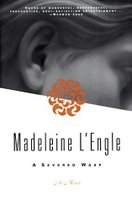
If you've read my blog for any good length of time, you might know that I have a favorite book. A book that I read a couple times a year (at least) as the spirit moves. I was sitting here, messing around on my computer, procrastinating (0f course), and happened to glance up over the top edge of my laptop screen at one of our bookshelves, and my eyes came to quickly rest upon the familiar spine of this book that is at once a comforting old friend and a constant source of inspiration, both for my musical and theological loves.
I have a lot of school reading to do this week. But that doesn't change the urge. Am I allowed to begin yet another re-read?
3.15.2006
the short list
books in the queue at the moment:
A Royal "Waste" of Time - Marva Dawn (this one is in progress)
Nickel and Dimed - Barbara Ehrenreich
Religion, Politics, and the Christan Right - Mark Taylor
The Lutheran Handbook
someday i won't have homework and i'll be able to enjoy reading again...
A Royal "Waste" of Time - Marva Dawn (this one is in progress)
Nickel and Dimed - Barbara Ehrenreich
Religion, Politics, and the Christan Right - Mark Taylor
The Lutheran Handbook
someday i won't have homework and i'll be able to enjoy reading again...
3.11.2006
Saturday Poetry: The Summer Day
i'm totally copying this idea from lutheranchik, who posts a favorite or pertinent poem on fridays, though i'm going to try to do it saturdays if i remember. the first of these saturday poems is "the summer day" by mary oliver. in general, it's one of my favorite poems, and i'm doubly inspired to post it because it's been so beautiful out the past couple days here.
The Summer Day
Who made the world?
Who made the swan, and the black bear?
Who made the grasshopper?
This grasshopper, I mean--
the one who has flung herself out of the grass,
the one who is eating sugar out of my hand,
who is moving her jaws back and forth instead of up and down--
who is gazing around with her enormous and complicated eyes.
Now she lifts her pale forearms and thoroughly washes her face.
Now she snaps her wings open, and floats away.
I don't know exactly what a prayer is.
I do know how to pay attention, how to fall down
into the grass, how to kneel in the grass,
how to be idle and blessed, how to stroll through the fields,
which is what I have been doing all day.
Tell me, what else should I have done?
Doesn't everything die at last, and too soon?
Tell me, what is it you plan to do
With your one wild and precious life?
--Mary Oliver
The Summer Day
Who made the world?
Who made the swan, and the black bear?
Who made the grasshopper?
This grasshopper, I mean--
the one who has flung herself out of the grass,
the one who is eating sugar out of my hand,
who is moving her jaws back and forth instead of up and down--
who is gazing around with her enormous and complicated eyes.
Now she lifts her pale forearms and thoroughly washes her face.
Now she snaps her wings open, and floats away.
I don't know exactly what a prayer is.
I do know how to pay attention, how to fall down
into the grass, how to kneel in the grass,
how to be idle and blessed, how to stroll through the fields,
which is what I have been doing all day.
Tell me, what else should I have done?
Doesn't everything die at last, and too soon?
Tell me, what is it you plan to do
With your one wild and precious life?
--Mary Oliver
12.11.2005
unprovoked discourse on my initials
 my married name: melissa ann bills.
my married initials: mab
how many of you remember reading romeo and juliet in high school? i mean, really remember it? mercutio makes an eloquent speech about one "queen mab." queen mab...hrm. i sort of like the sound of that.
according to wikipedia, queen mab is a fairy who is portrayed in mercutio's soliloquy as "a miniature creature who drives her chariot across the faces of sleeping people and compels them to dream dreams of wish-fulfillment."
dreamy.
11.18.2005
i don't usually do this (really)
but this one was nice. and good for a girl who was an English major.
Which Classic Female Literary Character Are you?

You're Beth March of Little Women by Louisa May
Alcott!
Which Classic Female Literary Character Are you?
You're Beth March of Little Women by Louisa May
Alcott!
6.06.2005
rain and books
so for starters....this is the current weather situation where i am. do you see the big splotch toward the top right? and then do you see the slightly smaller splotch touching it to the left? that's me. that smaller splotch. but i think that we're in for an exciting night. it's been raining for a few hours now, and the street behind our apartment is starting to flood. we have our windows wide open because, though it was 90 during the day, it is now in the 60s and feels really nice. the rain has cut through some of the beastly humidity, and there's a good breeze. not to mention the fact that i love listening to the rain.
i finished the source of life a couple days ago. i read the book start to finish in about three days. i didn't read it so quickly because it was a page-turner that i simply couldn't put down. i finished it quickly to be done with it: my brain lapsed into school mode and resolved to finish the book as if i had to finish it for a class. basically, the book bored me. moltmann is praised for some of his novel thinking, and in talking about the holy spirit, he repeatedly stressed the presence of the holy spirit - as the source of life - in all beings and things. i appreciated his thoughts on God's spirit being present not only in humans or in living beings, but in all creation. i suppose he borders on pantheism or panenthism, but i liked his viewpoint. at the same time, the book really did bore me. it felt more like a long sermon than a theological discourse.
but THEN....i bought freakonomics on saturday, between my two five-hour shifts at the mall (yes. ugly day.). i started reading it when i got back from work that night, read it on my way to church on sunday, read it on my way home from church on sunday, read it in the afternoon, and finished it less than 24 hours after i purchased it. it was amazing. i'm not quite sure how to explain it. steven levitt is a brilliant economist who has written a book that has nothing to do with economics. that is to say, he looks at everyday life using economic sorts of thinking: reasoning why we make certain decisions, how those decisions affect us later in life. he answers fun questions like "what do teachers and sumo wrestlers have in common?" or "does your name affect how successful you will be later in life?" or "what makes good parents?"...i've recommended this book to a few people, and i've had a hard time explaining the book without making it sound stodgy. but in truth, this book is entertaining and i appreciate its attempt to debunk "conventional wisdom." levitt enjoys taking an economic view over a moral view; that is to say, he states things as they are, without making judgments, and in doing so he speaks frankly and refreshingly about topics that we tend to avoid. it's an amazing book, amusing and fulfilling. you might come out feelings slightly smarter on the other side, and you will certainly come out feeling like you've just finished reading something totally worthwhile. it's awesome.
last night, i added more titles to my ever-growing summer reading list, and then matt and i trekked over to the jhu library so i could check a few of them out. i'd decided that it wouldn't be the best thing to blow all of my summer earnings on books right away. so library it was. i knew in advance that most of the books on my list are pretty popular, but i had no idea that out of 16 books that i looked up, only three would be available according to the card catalogue. and then only one was actually in the stacks. and THEN matt's id barcode wasn't working, so we couldn't even check out that one book that i had actually gotten my hands on. it was very disappointing. so instead, i have now grabbed tim o'brien's the things they carried off of my bookshelf. i read a chapter of it for a class in college and haven't yet gotten around to reading all of it. so now is the time. books are wonderful. i haven't played video games in a while, not even skies of arcadia, my obsession game of the moment. i've become a bookworm once again. hooray for summer, free time, and a happy long list of books to work through.
Subscribe to:
Posts (Atom)